
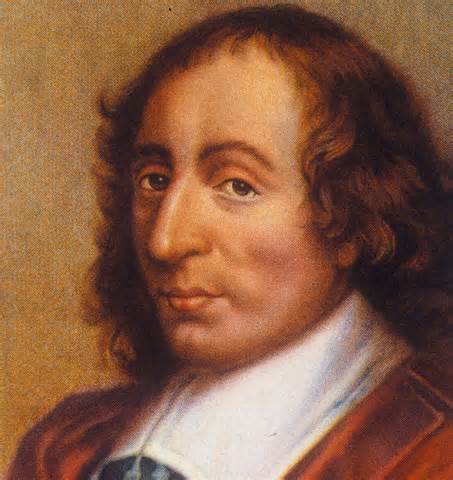
 “As rational as I like to pretend I am, I know that I am not ruled by reason. Looking back I recognize that many of my choices were choices of passion, neither governed by logic nor common sense. Many of these were good choices, though not all of them were. But taking stock of my life so far, I do not wish I had been more logical. I do sometimes wish I had been more passionate.” – Blaise Pascal
Blaise Pascal would have loved the Catch. He was a first century Christian seeking to be a compassionate voice of reason in the seventeenth century marketplace of which he was a participant. His “reasonings” are still considered to be some of the finest pages in French prose ever written. In his famed Pensées, Pascal surveys several philosophical paradoxes: infinity and nothing, faith and reason, soul and matter, death and life, meaning and vanity-seemingly arriving at no definitive conclusions besides humility, ignorance, and grace (a rather apt description of the Book of Ecclesiastes in the Bible, I would say).
We follow reason because we are reasonable. We leave reason off when it can no longer serve us. So Pascal’s conclusions of humility, ignorance and grace do not mean that we should therefore be forever stupid. It just means we realize our minds cannot take us all the way to where we want to go, although they can get us part of the way there, and for that they are useful.
Pascal would have been a great Catch member because he was taking part in the conversation of his culture. He had already engaged his culture in the areas of mathematics and physics; he later used some of the same arguments he found in science to discuss religion, philosophy, and ultimately, belief in God. He made some of the most lasting arguments on the existence of God ever penned, but not from the place of clergy. Had we the cultural definitions we have today laid over on the culture of Pascal’s time, I am convinced his books would not be considered Christian books, nor would he be considered a Christian minister. Certainly not a pastor or priest. He was a prominent scientist and philosophical thinker. He would have been considered a spokesperson in secular society. He would have been a regular on Larry King, one Larry would have called upon to get a believer’s perspective. He was engaged in the seventeenth century marketplace; and he used that platform to openly develop and even wrestle with his faith.
In like manner, we seek to be engaged in the twenty-first century marketplace, explaining and living out our relationship with God in terms relevant to the discussions of our day. We read the Bible and the newspaper at the same time, and not the news as delivered by our own Christian version of the media, mind you (there would have been no equivalent to a Christian rendering of the current culture in Pascal’s day), but by secular society. We are where we live, and we live in the world, and as long as the world is our address, we will listen, observe, and compassionately engage it, not to win a culture war, but to win the hearts, minds and souls of those for whom Christ died.







 John Fischer The Catch