
Those who are indwelled by and dependent upon the Spirit of Jesus are humble and self-effacing. They are deeply touched by the weakness and suffering of others. They are gentle and kind. They long for goodness in themselves and in others. They are merciful to those that struggle and fail. They are single-minded in their love for Jesus. They are peaceful and leave behind a legacy of peace. They are kind to those that ill-use them, returning good for evil. – David Roper
This description of a Christian based on the teaching of Jesus from the opening of the Sermon on the Mount starting in Matthew 5, should be a common, well-known description of a Christian by now — a couple of centuries after it was delivered. We should have this down pat. People should see someone like this and immediately recognize a Christian. The fact that this is clearly not true is an indication that other factors contribute to modern Christianity and the attitudes of Christians besides the scriptures, and more importantly, the words and example of Jesus.
I was thinking about calling this the “Beatitudes Christian,” until I realized this is not the description of a certain strain of Christianity; it is, and should be, the simple description of a Christian for any age, any time, any place. A follower of Christ looks like this. But we consistently treat the Sermon on the Mount and Beatitudes as some kind of radical version of Christianity for another day and another time.
Think about it. I grew up in a strong, biblically-based evangelical church and I always remember skipping over Matthew 5-7 as if it were something that was way outside the reach of my understanding. Everything was backwards from the way I was learning it. I also noticed that almost no one ever preached on the Sermon on the Mount. Certainly it doesn’t mean that the bums of the world are better off than we are. And it can’t really mean to let people push you around. And certainly it doesn’t really mean for you to be meek and wimpy. It must be one of those passages not to take literally. Get the general idea and somewhere down the road it might make sense. Until then, we’ll take this as a passage for the losers of the world. Isn’t it nice to know that Jesus thought of them?
Is anybody about ready to scream at me by now? If we apply the Sermon on the Mount to anybody but ourselves, then we’ve missed it.
This is not unusual Christianity. It is not just for radicals. Where’s the disclaimer here about this not being for everybody? It’s not there. This is a very clear statement, supported over and over again in the scriptures, that the “losers” aren’t just the poor folks who get included in with the righteous rest of us, they are the only ones who get in.
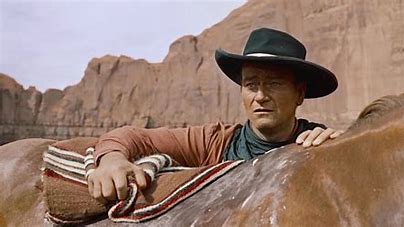
So if Roper’s description of a Christian is right, then we should stick out like a sore thumb in our culture right now. The acceptable cultural milieu is currently one of separation, isolation, fear, bullying, show no mercy, take no prisoners, no sympathy, no empathy, foster hate, and a rejection of that which is different. It is the culture of the strong man more in keeping with John Wayne than Jesus. In fact, our culture right now is dominated by everything that is the exact opposite of the Beatitudes. So if you want to be different, now is the time to follow Jesus, and steer clear of any movement of Christianity that borrows from the strong man tactics that are prevalent today. That’s not Jesus; it’s John Wayne.







 John Fischer The Catch
All I can think of saying to Today’s Catch is – Amen!
I think you may be showing a little generational disconnect, John.
Apart from all boomers, most millennials, and many Californians residing near a certain airport, who from the current generation recognizes the name “John Wayne” (let alone know what he was famous for)?
I ask because many of the celebrities I grew up admiring (even idolizing) are unknown to my younger peers these days. I am truly disheartened when I receive blank stares when mentioning my favorite movie actors such as Charlton Heston, Gregory Peck, Jimmy Stewart, Gene Kelly, Henry Fonda, Cary Grant, James Mason or others.
Ah, but such is life.
Certainly there must be some current entertainment icon you could select who would be more recognizable to your younger readers which, in turn, would help them to better understand your John Wayne references?
Even though it may be counter to your message above, I’ll be glad to recommend the following John Wayne films:
“The Man Who Shot Liberty Valance,” “The Big Country,” “The High and the Mighty,” “The Searchers (from the top photo above),” “The Quiet Man,” “North to Alaska,” “True Grit,” “The Shootist,” and, yes, many more!
Also a P.S.:
Don’t you mean a couple of millennia after it (the Sermon on the Mount) was delivered?
Shalom, Peace…
🙂
Keanu Reeves? I don’t know. the new guys don’t have it.
How about Dwayne Johnson, “The Rock”?
Well said, John. Matthew presumably gathered all of the teachings that go into the Sermon on the Mount and put them first in his Gospel because they were really important. Just as the teaching on the last judgment with the division of sheep and goats comes last, as the final teaching before Jesus goes to the Cross, because it is also really important. We all want to skip something. Jesus calls us to embrace all of it, even when it is uncomfortable. But isn’t that scary? We can “be not afraid” as we embrace the uncomfortable because we can do it with Jesus and with each other. Thanks.
Brilliant, and I’ll use that as my devotions today. There’s one more attribute to add to your list of today’s cultural features: victimhood. Look at how many people who’ve been caught with their hand in the cookie jar, who blame the jar for trapping their hand …