by Marti and John Fischer
Have you ever had one of those days when you cannot consume enough coffee to prop the eyelids open and you require elbows, like crutches on the table, to hold you up?
I’m having one of those days today.
My mind drifts from one thought to another. They are all random notions — disconnected brain waves like streams of consciousness.
I am sitting at the counter of a roadside diner and it is early in the morning. This diner is the kind of place that still has a jukebox. All you need is a quarter to play three tunes. Today, however, someone has loaded the thing up with quarters and punched in the same tune over and over. It’s Linda Ronstadt’s Love is a Rose. It’s a shame because I used to like this song, but if I hear it one more time…
The steam from my cup is promising me that the coffee is hot. Just the way I like it. This is diner coffee — a whole different thing from Starbucks, but still worthy in its own right. This coffee is part of the experience — the thick heavy mug, the formica counter with the chrome edge, the red vinyl-covered stools, and the smell of bacon and eggs on the grill. A fine designer coffee wouldn’t work here. It would be out of character.
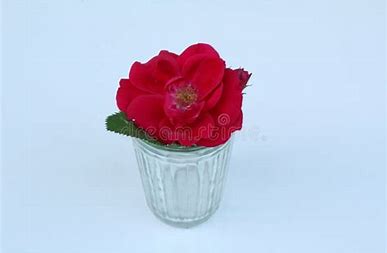
In front of me on the counter is a small juice glass filled with water for a rose that I take to be from someone’s garden. The rose rests against the glass’s brim. Like me, it needs something to prop it up today.
This rose is an odd mismatch of beauty and pain and yet God blends the two together in the same flower. This cannot be a mistake — an oversight along the production line of creation. Roses are meant to be this way — entangling magnificence and delicacy among the thorns, providing no protection for those who would dare touch carelessly. I examine this rose more closely. Ouch! No wonder the rose is the supreme metaphor for love. Love is not without injury.
“If you can’t handle the beauty of a rose because of the thorns,” I write in my note pad as I notice a little blood on my pad of paper, “you can never expect to hold a woman.”
It’s a bit melodramatic, but it’s inspired by Linda’s warning which comes around one more time: “Love is a rose, but you better not pick it. Only grows when it’s on the vine. Handful of thorns and you know you’ve missed it; lose your love when you say the word ‘mine’.”
“I don’t think even Neil Young would like hearing his own song this many times.” It’s my friend, Kate, topping my coffee off even though I’ve only had a few sips.
“No kidding. That’s a Neil Young song? Who keeps playing it, anyway?” I ask.
“It’s that guy over there in the corner booth. He comes in once in a while and always plays the death out of that song.”
“He probably said ‘Mine’.”
“Yep, and all he’s got now is a handful of thorns.”
“I love places like this where you can figure out everyone’s life.”
“Wish someone would figure out mine,” she says as a new party comes in the door. Kate hurries over to seat them leaving me to reflect on the metaphor.
Linda — Neil Young, whoever — is talking about a different kind of rose than I think about when I think about women. I think about the roses that are grown for me to purchase as a surprise for the woman of my affections, or to brighten up her life in the middle of a bleak February. Or the rose could be a woman, plucked from the garden of other flowers to be my possession. But Linda is singing about something else. She places the rose as a woman growing in her own garden. She would have me tend to this flower, not pick it. I like this use of the metaphor though I have grasped so little of what it means. I think it means that I cultivate the soil, water the plant, weed it, and get scratched up in the process. I don’t “pick” the woman’s beauty. I don’t cut her off at the stem and put her on display. I come to her garden where she is growing and appreciate her as a source of life, and I contribute to that life if I can.
I lean in to see if I can smell the rose in front of me and a familiar voice says, “A rose, by any other name, would smell as sweet.”
“Shakespeare?” I ask, turning around.
Kate nods. “Romeo and Juliet. Love is such a tragedy.”
I know that there is a lot behind that statement for Kate. Her life holds much tragedy and yet there is a careless optimism about her, as well. Kate walks around like she has some kind of secret that makes her brim with joy inside, but I also have a feeling you’re not going to find out what that is unless you qualify.
“So what are we having this morning?” Kate’s fine hair in tight curls, pug nose and freckles defy both her age and her pain. There is an unmistakable playfulness in her smoke blue eyes.
“Coffee’s okay for right now, except I probably should get something in my stomach. Do you have muffins or something like that?”
“We make our own coffee cake here. It’s scrumptious.”
“Say no more.”
When Kate returns with my order, she sits on the stool next to me, needing only to use one of her elbows to prop herself up. She is more awake than I. She stares at me as I bite into the coffee cake. The moment of silence makes me a little uncomfortable. “What do you want to talk about?” she finally asks.
My first thought is to talk about roses, but opting for self-protection I blurt out instead: “Why isn’t a fine woman like you not married, Kate?” She seems surprised.
“You just used a double negative.”
“Did I?” stumbling over my words, “I guess I did.”
“Aren’t you a bit too old to be asking me a question like that?” she says, her eyes dancing. She is toying with me as I try and squirm my way out of a dumb question. Finally she has mercy on me and answers, her tone suddenly much more serious.
“When my husband left me 12 years ago, I ran around in horror realizing for the first time as a mother I couldn’t make things right. It was the end of childhood innocence for my children, which is pretty much the end of childhood. If I were a mother lion I could devour the enemy, drag the cubs into the cave, and lick their wounds — sorry, I fell asleep last night watching Animal Planet — but my cubs were out in the elements developing at the wrong pace.
“He left me with no house, no car, no job, two very small children, and no alimony. Well, actually I was awarded it but never received it,” she said as if inhaling it all in one more time and then releasing it as she continued, “One thing he did leave me, though…”
“What’s that?” I ask, hoping for some better news from my gender side of things.
“Two sexually transmitted diseases.”
“Gees, Kate! How am to respond to that?” I quickly defer to the American Beauty sleeping in the juice glass of water in front of me.
“Very pretty.”
“Thanks, it’s from my garden, my hiding place. You know, roses are as old as time itself. It has become a way to speak of women and their beauty. It’s a link for me — a link between me and the ground. Like the link that occurred when Jesus stood before me and I saw Him for the first time and turned over my heart. Then love flowed out of His wounds, into my wounds and I knew, I knew, I knew this was His plan. Jesus is the ultimate link, but there are many other links in our passage here. I think He wants us to become aware of those links as well — like you and me.”
A lull in the conversation makes me immediately uncomfortable. Did I want to be linked to this woman? A waitress in a funky diner? And why do I want to keep her small and insignificant right now? Suddenly I recall the numerous times my wife has talked of how many men hold women as either above them (like their mothers) or below them (like mistresses or imaginary lovers). Have I made myself out to be better than Kate? Was she lucky to have me spending time with her, or was I the fortunate one? How difficult it is for me to accept her as she is accepting me right now — as someone on the same level.
Kate’s eyes suddenly are showing their tired side, and I wonder how she manages to take care of everything. While I can’t imagine her asking help from anyone, I can’t help but think what it would mean to her to not be alone — to have somebody that really cares about her.
Someone calls out “Ma’am!” and she is off muttering about the point of new name-tags if no one is going to notice you have a name.
There must be a garden of stories written on the hearts of every woman and told through their lives like the one I just heard. Kate’s story echoes in my mind a confusing combination of absolute courage and extreme loneliness, commitment against unfulfilled promises, compassion among so many cold shoulders of alienation. As I scribble out the last of what I remember of her story, I see, through my reflection in the juice glass, the struggle for dignity among the women I know, for they are in my own backyard — roses neglected in my own garden.
There is a thin membrane that protects the self, and love’s thorns can puncture it with ease and tear it open. This is the painful service that love provides for us: it strips away our protective layer leaving us open to both hurt and love, and since we are human and fallible, we cannot love without hurting or be loved without being hurt.
I once cared for a trellis of wild roses along one side of a stone wall in front of our home when we lived in Massachusetts. Every spring, the plants needed to be pruned. Long strands of thick, thorny, bud-less shoots had to be cut out for the smaller, blooming stems to receive all the attention. Those thorny shoots constantly fought with me, poking through leather gloves and ripping open the plastic leaf bags I tried to contain them in. My hands were puffy for days after this ordeal, and my arms, a road map of scratches.
It is in caring for a woman, as with roses, that a man experiences his deepest pain. It is his most severe test.
Suddenly, as if on cue, I hear again, “Love is a Rose” on the jukebox, and I laugh out loud.
Love is a rose but you better not pick it
Only grows when it’s on the vine
Handful of thorns and you know you’ve missed it
Lose your love when you say the word “mine”





 John Fischer The Catch
Such a great message about Jesus and roses. This lady Kate and her children had a lot of pain but, she truly went to t he one that could save her. This message gives each of us so much to think about ad hopefully always the path for us in our hearts to feel better is following Jesus. He is always best no matter what.