
Today, I appoint you to stand up against nations and kingdoms. Some you must uproot and tear down, destroy and overthrow. Others you must build up and plant. – Jeremiah 1:10
Power tends to corrupt, and absolute power corrupts absolutely. – Lord Acton
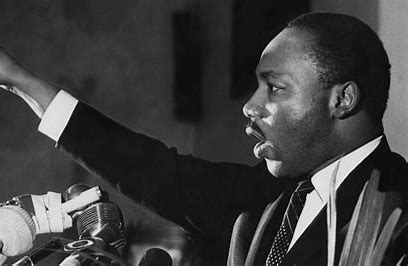
The concept of pitting truth against power has been around since classical Greece and championed by the likes of Gandhi, Muhammad, and Martin Luther King. The phrase, “speaking truth to power” is commonly attributed to Bayard Rustin, an African American Quaker and leader in the civil rights movement. He popularized the phrase in a 1955 pamphlet, “Speak Truth to Power: A Quaker Search for an Alternative to Violence.”
Power almost always leads to corruption. Those in power have a tendency to use power to oppress or lord it over the powerless. Speaking truth to power is the prophetic equivalent of calling out the abuse of power and making those in power accountable for their errors. It is an equalizer — a means of setting things straight using non-violence to bring equality and justice to society.
There was an aspect of the Jesus Movement that spoke truth to both the prevailing culture and the church. Because the movement was largely outside the structures of the church it was able to reach the general public from the streets with a message of urgency about issues of justice, equality and the need to get right with God as expressed through the gospel. To the church, the message was one of honesty, candor, and a return to the basics of belief, including a throwing off of legalism and the do’s and don’ts of non-biblical Christian traditions like no dancing, smoking, drinking and behaviors that have nothing to do with following Christ. And the message was very much akin to the messages of the Sermon on the Mount with an emphasis on loving our enemies, being peacemakers, going the extra mile and giving priority to the poor and the homeless, the widows and orphans.
Today, the radical nature of this message lives on. It is in some ways more vital today because a monumental change has occurred. Instead of the seats of power being set in the secular culture, they have now become centered in the church itself. Much of Christian leadership has sold out to political power, thinking that the kingdom of God can be furthered through politics. Many Christian’s have become enamored with power and have confused the kingdom of God with Christian nationalism. So speaking truth to power is needed in ways never before imagined.
This is why the spirit of the Jesus Movement needs to be brought forward today to address the seats of power within the church itself. Where the church should be the one speaking truth to the power of the ruling class, the church, or at least voices within the church, should be speaking truth to itself. Church leadership has cozied up to political power and lost its prophetic role in society.
This is why we place great hope in the Millennial generation because it is closer to the Jesus Movement model than to be caught up in the lure of the Christian subculture that has in many ways sold out to politics and secular culture. This is precisely why we are bringing the Jesus Movement forward, because the prophetic nature of the movement is needed today. If ever we needed to speak truth to power, it is right now, and the people we need to be speaking to are the very people we have erroneously become.
For more on speaking truth to power, see our church service Sunday night on <facebook.com/thecatch> and don’t miss our podcast, Between the Answers.
Introducing our new podcast, Between the Answers
Beginning September 18 through mid-October, the daily “Between the Answers” Podcast will look back to the pioneers of a historical phenomenon: the Jesus Movement, examine why it transformed into a broader social and political force over time, and ask questions about the Movement’s original message and its transformative power today. Our premise lies in the questions we need to ask between the answers.
Join John & Marti for today’s podcast, “Speaking Truth to Power” by clicking on the logo:







 John Fischer The Catch
Pingback: Build a Highway for the Lord | Christianity 201