
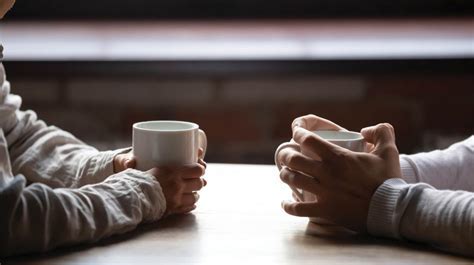
We spend much of our lives trying to control things—our schedules, our health, our careers, even our emotions. But relationships? That’s where control meets its match.
You can’t control someone else’s heart. You can’t script their responses or guarantee their commitment. And as terrifying as that can be, it’s also where the most profound growth happens.
Uncertainty in love is not a flaw. It’s a feature. It’s the space where we either build walls or build intimacy. It’s what invites us to trust—not because we have proof of what will happen, but because we choose to believe in what’s possible.
For Such a Time As This
This invitation to trust amidst uncertainty is not new. In fact, it echoes the story of Esther. Placed in a position of power and influence, Esther faced a moment where love for her people collided with real fear. She had no guarantee of success—only the inner sense that she was being called to risk everything for the sake of others. Her uncle Mordecai’s words still ring with holy weight: “And who knows whether you have not come to the kingdom for such a time as this?” (Esther 4:14).
Esther’s story reminds us: love without certainty is true love. Courage doesn’t wait for clarity. And sometimes, stepping into the unknown with faith is exactly where we’re meant to be.
Fear and the Need to Know
Uncertainty feels threatening because we mistake it for danger. Our brains are wired to seek safety, and when we don’t know where we stand with someone, we brace ourselves for impact. So we withdraw. We get defensive. We push love away before it has a chance to hurt us.
But more often than not, the threat is imagined. The fear isn’t that we’re unsafe—it’s that we might be seen, or worse, not loved once we are.
Vulnerability is risky. So is staying open when you’re unsure. But those risks are the exact gateway to joy, to connection, to the kind of love that transforms.
Love Without Guarantees
There is no such thing as risk-free love. Real love always demands something of us: our presence, our patience, our trust.
To give love freely—without keeping score, without certainty of return—is one of the bravest things a human can do.
It means saying: “I will show up even when I don’t know what tomorrow looks like.” It means asking: “What does my partner need to feel safe?” instead of, “What do I need to feel in control?”
And when that’s mutual—when two people choose trust over fear, presence over perfection—it creates something deeper than certainty. It creates intimacy.
The Opportunity Inside Uncertainty
What if uncertainty isn’t a signal to retreat, but an invitation to move forward? What if it’s the very thing that draws us out of shallow habits and into radical growth? What if, instead of resisting it, we leaned in?
When you stop demanding guarantees and start giving without condition, you change the game. You stop punishing. You stop pretending. You start listening—not just to your partner, but also to your own deeper needs.
And in that space, something shifts. You stop trying to control love and start learning how to receive it.
Living With Open Hands
The beauty of uncertainty is that it keeps us awake. It keeps us honest. It reminds us that love is not a contract; it’s a choice—made again and again in the tension between fear and faith.
You can’t always know where a relationship is headed. But you can know how you want to show up in it. You can choose trust over suspicion. Generosity over self-protection. Courage over comfort.
Because love isn’t built in perfect clarity. It’s built between the answers — in the fog, in the staying, the listening, the choosing, and the grace to begin again.
Discussion & Reflection Guide
Use the following prompts for personal journaling or group discussion:
- Where in my life am I currently seeking control in a relationship? What would it look like to open my hands instead?
- How do I typically respond to uncertainty in love—do I retreat, withhold, over-function, or push away? Why do I think that is?
- How can the story of Esther speak into my current season? Where might I be called to step forward despite fear?
- What does it mean for me to “choose trust” right now? What small action could I take this week that reflects that choice?
- Which line or idea from the article resonated most with me? Why? How might I live that truth more fully?
Take time to answer. Let grace meet you in the tension.






 John Fischer The Catch