
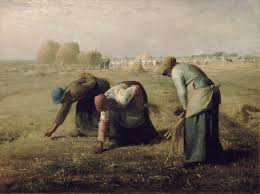
Over the next three weeks, we are going to step into one of the most beautiful and surprising stories in Scripture: the Book of Ruth.
At first glance, Ruth is a small and quiet book. It sits between much larger and more dramatic stories in the Old Testament. There are no armies marching, no prophets confronting kings, no miracles splitting seas. Instead, the story unfolds in fields, homes, and ordinary conversations between people trying to survive loss and uncertainty. Yet within this simple story lies a deep message about belonging.
Ruth is a Moabite woman, a foreigner, someone who by every social and cultural measure stood outside the community of Israel. She had no power, no protection, and very little security. She was a widow living in a world where widows were among the most vulnerable members of society. By birth and circumstance, Ruth was an outsider. And yet Ruth becomes one of the most important women in the entire biblical story.
Through a series of courageous choices, acts of loyalty, and relationships marked by kindness, Ruth moves from outsider to insider. She becomes part of the community of Israel, the great-grandmother of King David, and ultimately a woman named in the genealogy of Jesus. But the path that leads her there is not simple. It begins with grief, migration, and risk.
When Naomi, her Israelite mother-in-law, prepares to return home to Bethlehem after the death of their husbands, Ruth faces a defining decision. She can remain in her homeland of Moab where she has family and familiarity. Or she can follow Naomi into an uncertain future among people who are not her own.
Ruth chooses Naomi. Her words echo across generations:
“Where you go, I will go.
Where you stay, I will stay.
Your people will be my people,
and your God my God.”
This is not only a declaration of loyalty. It is a choice to cross borders — cultural, religious, and social. Ruth willingly becomes the stranger.
The Book of Ruth invites us to see what happens when someone steps into a new community with courage and humility, and when that community chooses how it will respond to the stranger in its midst.
As the story unfolds, we encounter Boaz, a man whose generosity and hospitality open a door for Ruth. Through his kindness, we see how the law of redemption — the role of the kinsman-redeemer — becomes more than a legal structure. It becomes an expression of care, responsibility, and faithful love.
The Hebrew word often used in this story is hesed — loving-kindness, covenant faithfulness, a deep commitment to act for the good of another person. It is the thread that runs through the entire narrative.
Ruth shows hesed to Naomi.
Boaz shows hesed to Ruth.
And through these acts of loyalty and compassion, a new sense of belonging is created. Ruth does not become part of Israel through power or privilege. She becomes part of the community through faithfulness, courage, work, and relationships. She labors in the fields, learns the customs of the people, and builds trust within the community. Slowly, what began as foreignness becomes kinship.
Her story raises questions that are deeply relevant to our own time. We live in a world shaped by migration, cultural difference, political tension, and social division. Many societies struggle with questions about the stranger, about belonging, about who is welcomed and who remains outside the circle. The Book of Ruth speaks directly into those realities.
It invites us to consider how communities of faith respond to outsiders. It challenges us to see the dignity and courage of those who cross borders seeking a new life. And it reminds us that God’s redemptive work often happens through quiet acts of loyalty, generosity, and courage.
Ruth’s story also elevates the role of women in ways that were remarkable for its time. The entire narrative moves forward because of the faith, wisdom, and determination of two women — Naomi and Ruth — who refuse to give up on life or on God’s faithfulness. Together they navigate grief, poverty, and uncertainty, and through their courage a future is restored not only for themselves but for generations to come.
In a world that often feels polarized and divided, the story of Ruth offers another vision. It shows how kindness can bridge differences, how faithfulness can heal broken futures, and how strangers can become family.






 John Fischer The Catch