
Catch more videos shorts from John, by clicking here.
Catch more videos shorts from John, by clicking here.
Rather, we have renounced secret and shameful ways; we do not use deception, nor do we distort the word of God. On the contrary, by setting forth the truth plainly we commend ourselves to everyone’s conscience in the sight of God. (2 Corinthians 4:2)
“Hi, my name is (your name here), what’s yours?”
According to Paul, author of 2 Corinthians and architect of the new covenant, this is how God is going to further His work in the world. It’s how He is going to spread His gospel around. He is going to indwell us, and then connect us up to people who need Him (which is everybody, so you can start anywhere).
I’m going to stop for a moment before we go any farther, and make sure you know who Paul is talking about in these words of instruction and encouragement. It’s important that you get the fact that you and I are the ministers of the new covenant he is referring to. “This ministry” we talked about last Friday is our ministry. This might have started out being about Paul re-establishing his credentials as a minister of the gospel of Jesus Christ to the Corinthian Christians, but he is taking time to detail this ministry, because it’s not about Paul anymore; it’s about the Corinthians Christians he’s writing to, and by way of translation, you and me.
But don’t panic, because even though the ministry is ours, the power is not. The “stuff” of this ministry — what we deliver — doesn’t come from us, so there is no need for any of theses underhanded tactics, because they are all related to covering up human limitations. They are mechanisms of inadequacy.
Because it is “this ministry” — the one that relies on the Spirit of God shining in and through the lives of all of us — we are all qualified for it on the strength that the Spirit provides. And since it is a ministry totally based on that Spirit in us, it becomes no longer necessary to hide, deceive, distort or in any way tamper with, or alter the word of God — things that would be necessary in order to compensate for our fears, weaknesses and inadequacies were we relying on ourselves.
All these are coping mechanisms that are necessary when we have to produce the changes ourselves. But this isn’t our ministry, it’s the ministry of the Spirit of God in us. We are not even aware of it all the time; we just show up, knowing that the Spirit of God shows up when we do, because He is in us, and He will show us what to do and give us the strength to do it.
So therefore, that’s why Paul can finally say that the ministry is all about commending ourselves to everyone’s conscience in the sight of God. Nothing to hide, no tricks, nothing underhanded, just you and me, in the middle of whatever we are going through, counting on the fact that the Spirit of God shows up when we do. The word “commend” here means to introduce. Thus the introduction, “Hi, my name is (your name here), what’s yours?”
This is, pure and simple, the way the Gospel of Welcome goes forward. Since the Holy Spirit is living in us, we have merely to introduce ourselves to people, open wide our hearts to them, and God will take it from there. Can you do that? I think we can all do that.
Day 14 Challenge:
In 2 Corinthians 4:1, Paul spoke about not losing heart. But what is losing heart? Quite simply, it is a description of discouragement and a form of non-clinical depression. We experience depression and discouragement when we wear our veils because these veils keep us from the freedom found in His Spirit, and we lose heart.
Rather, Paul says to prevent us from losing heart, we renounce depending on ourselves, attempting to help God out, trying to earn frequent flyer miles from God toward eternity, considering our sin not as dirty as our filthy neighbor, or rationalizing that God is ‘helping us’ make ourselves into better people.
We are servants of Christ, with our eyes fixed on Him. What He tells us to say is what we are to say, and what He tells us not to do is where our limits are. That, unlike other ministries that try to win the approval of, or please others, is the new covenant ministry. We are servants of this ministry, which is Christ in us.
Action Items:
CLICK HERE TO RECORD YOUR ANSWER ON OUR FACEBOOK PAGE
Therefore, since through God’s mercy we have this ministry, we do not lose heart. (2 Corinthians 4:1-2)
 On our BlogTalkRadio show last week, we had two guests Marti and I have known since we first got married. Ralph and Sherrie Buffa were technically our first neighbors, and they both ended up being in our discipleship groups studying the new covenant together — Sherrie in Marti’s group, and Ralph in mine. I thought it would be great, since it has now been almost 40 years since they had first been exposed to the teaching of the new covenant, to have them talk about how significant this teaching has been in their lives, looking back on all those years. What I had forgotten was the fact that they were both brand new Christians when they started with us, so, in effect, this was the first Bible teaching they experienced as believers.
I found this unique because most people who come to the new covenant have been Christians for some time, and, as is typical for most, their early experiences of Christianity are in somewhat legalistic settings. The new covenant, set against most people’s church experience, is markedly liberating. Yet for Ralph and Sherrie, the new covenant was the first thing they received as new believers. In fact, it was the reality of this teaching that cemented their faith right from the start. They didn’t have to unlearn what so many Christians get wrong the first time.
The other thing that was surprising about our interview with these friends was how freely they talked about the content of their lives. We were a little concerned, going into this, that Ralph, being a relatively mild-mannered man, might not have much to talk about. As it turned out, he really had quite a bit to say. And the theme of what he and Sherrie talked about — how Ralph would sum up the new covenant in one word if he had to — was the word “confidence.”
I had never thought of confidence as central to this teaching, but he is right. In fact, the word “confidence” comes up at least three times, depending on what translation of the Bible you are using, and another related phrase that Paul uses is in our verse today means almost the same thing: “we do not lose heart.”
Why, I wonder? Why is confidence the natural result of taking the new covenant seriously in our lives? Because it uses God-confidence, not self-confidence.
Paul says we don’t lose heart because of this ministry. What is this ministry?
It’s God’s ministry, not ours. He is carrying out His plan in and through us. We don’t have to come up with this; we are just available to God to be used as a part of what He is doing in the world.
We receive it; we don’t create it. We don’t drum it up, dress it up, manipulate it, sell it, hock it or make it up. It’s His ministry and we receive it through Christ.
It’s based on the fragrance of Christ in our lives. We don’t create that; we have nothing to do with that. It’s not even for us or for others; it’s primarily for God. Others are the beneficiaries of what is going between Christ in us and God in heaven. Or as Jesus taught us to pray: “Thy will be done on earth as it is in heaven.” And where that happens is in us. We are the proving ground for the kingdom of God.
It goes on in spite of us, not because of us. Even our mistakes and human limitations (e.g., Paul’s missed opportunity due to his own anxiety) are woven into the plan of what God is doing in the world so we can always say we are being led in triumph.
It uses the worst life can throw at us, to bring out the best in us. (This part is coming up later in this chapter; stay tuned for this.)
We are not adequate in ourselves for any of this, but God has made us adequate in His Spirit. It’s actually in and through our own inadequacy that we experience His adequacy.
So, you see, we can have confidence because this ministry is all coming from God. Everything from God; nothing from us.
Therefore, since we have THIS ministry — not ours, but His: operating in Him, through Him, by Him and because of Him in and through us, conforming to His ultimate plan to make us more like Christ — we do not lose heart. That’s confidence — God-confidence — because it depends on God and not me.
Day 13 Challenge:
Therefore, since through God’s mercy we have this ministry, we do not lose heart. (2 Corinthians 4:1-2)
Action item:
Take and post a selfie of a Minister of Christ.
CLICK HERE TO RECORD YOUR ANSWER ON OUR FACEBOOK PAGE
Now the Lord is the Spirit, and where the Spirit of the Lord is, there is liberty. But we all, with unveiled face, beholding as in a mirror the glory of the Lord, are being transformed into the same image from glory to glory, just as from the Lord, the Spirit. (2 Corinthians 3:17, 18)
 When we turn to the Lord, the veil is taken away and we are stripped down to our bare, naked selves. We are who we are, but we are not alone. The Spirit of God is there, too.
This is where the message of the new covenant starts to soar up and over everything else. This is where the new covenant does for us what none of us can do for ourselves. It sets us free. No more beating on ourselves to try to change or conform to our — or anyone else’s — idea of who we should be. We are being changed already. The change has begun, and all the elements necessary to complete that change are already in place. This is you and me, unveiled, with the Spirit of the Lord in us, and transformation happens as we constantly keep our eyes focused on Christ.
“Where the Spirit of the Lord is, there is liberty.” And just where is the Spirit of the Lord in the context of what Paul is discussing in these verses? In us. So, therefore, liberty is in us, too.
This is the best news ever. What does this liberty look like?
Freedom from having to be something we are not. No more trying to conform to what anyone, including the church, says we are supposed to be. This includes spoken and unspoken levels of conformity.
Freedom from having to produce righteousness on our own. Righteousness is, and has always been, out of our reach. There are none righteous; no, not one. The old covenant was made to be broken so we could be introduced to the new one. Things are going along as planned.
Freedom from the guilt and condemnation that comes when we can’t produce righteousness. Guilt and condemnation are attributes of the old covenant. They are the result of our failure to follow the law. They are not to be even in the vocabulary of a new covenant Christian.
Freedom from hiding. Hiding is the result of our inability to follow the law. Our failure forces us to hide it. All of these things — failure, guilt, condemnation, hiding —are all related to bondage to the law. Each one of these is like a heavy weight laid on us, one on top of the other, until our backs break under the load. The new covenant removes them all. Throws them all off. This is the liberty Paul is talking about here, and it is a complete and total liberty which comes from an entirely different orientation to life — a reorientation from having to change ourselves, to being changed by God.
Look to the Lord; stay open and vulnerable; stop striving; trust in His power to change you. This is the power, glory and liberty of the new covenant. Do you know it? I’ve known it for years, and never needed it like I do right now. This is why the new covenant is always new; it never gets old. If it’s old, it’s the wrong one.
“Oh how different life can be, when all the changes don’t depend on me.”
from “Ways and Means,” a song from “The New Covenant” musical, written by John Fischer, available free by clicking HERE.
Day 12 Challenge:
16 But whenever anyone turns to the Lord, the veil is taken away.
The veil is over our minds, but the Lord is in our hearts.
17 Now the Lord is the Spirit, and where the Spirit of the Lord is, there is freedom.
Freedom comes from this great fact: the one who is within us is God himself.
When you start looking at the One who is doing this in your life, the Lord Jesus, and beholding Him with all your veils taken away so you are not afraid to look at your own evil capacity, then a wonderful thing happens: 18 And we all, who with unveiled faces contemplate the Lord’s glory, are being transformed into his image with ever-increasing glory, which comes from the Lord, who is the Spirit.
You can finally be you, and you recognize God wants you to be you. You are already pleasing to Him. God’s basis of deliverance is to give you the gift of full acceptance and righteousness. You do not have to earn it at all, and your performance is not going to affect it. You already have it.
Action items:
Take a minute and recognize for yourself how futile it is to try to be good, but how wonderful it is to realize that, by the gift of God, you already are good in His sight.
Thanks be to God who always leads us in His triumph!
CLICK HERE TO RECORD YOUR ANSWER ON OUR FACEBOOK PAGE
But whenever anyone turns to the Lord, the veil is taken away. (2 Corinthians 3:16)
 Veil: Whatever I hide behind that allows me to keep my fears, insecurities, sins, judgments and rationalizations to myself while at the same time giving off an impression of great spiritual depth and insight. It is necessary because I am trusting in myself and my own manipulations for my good standing among other Christians, and I cannot let anyone know the truth about me because it would ruin that good reputation I have been nursing for some time now. What compounds this charade is being in a group of people (some people call this: “church”) who are all doing the same thing, so that we all believe the veils we wear instead of the truth. The line from the song, “What Has Gone Wrong” says it all: “Is everyone here as good as they seem, or like me, are they faking it too?” Who would know? No one, unless someone tells, but that’s unlikely, because that would break the unwritten code that we don’t tell, so as to protect each other.
It’s heinous. It’s a lie. It’s a bad smell in the nostrils of God — so bad that it masks the fragrance of Christ that He is longing to smell in me and smell in the world. And how do you suppose I know so much about this wearing of veils and all the slight subtleties surrounding it? Because I am so good at it. I am one of the best — certainly the best I know, since I don’t know the real truth about anyone else.
There is a line in the 21-Day Challenge for today that Marti wrote (below) that cuts me to the quick. It certainly put me on my knees when I first read it last night. “There is no way you can show yourself how self-righteous you are.” Isn’t that the truth. We become so good at these veils that we can’t see them. Even if someone showed us, we wouldn’t believe it. I honestly think that when it comes to seeing and removing veils, we are the last to know.
“John, something stinks about you; can’t you smell that?” No, because I am the main one I have fooled, and I’m used to me. That’s why no one can take his or her own veil off. You can’t even see your own veil, much less remove it.
There’s only one way out of this mess. Turn to the Lord. “Whenever anyone turns to the Lord, the veil is taken away.” Only the Lord can take it away, and He does it when we turn to Him.
But what does that mean? How do you turn to the Lord? What do you do when you turn to the Lord? I’m not so sure I know, except that I know you can’t fool the Lord. He sees everything and He sees through everything. You can’t hide anything from Him.
Here’s what I know about facing the Lord:
Do you feel that? Are you there?
And once you are in that place where you are conscious of the Lord, and you are humbled, frightened and revealed, then stay that way. When you get up off your knees, don’t stand up and walk away in your heart. Stay right with Him because He’s right there with you.
Stay humbled. Stay frightened. Stay vulnerable. Keep facing the Lord, especially when facing someone else.
Day 11 Challenge:
Paul is very clear that the nature of the darkness, the blindness that lays over the minds of the Jews of his day, which he calls a “veil,” is the same veil that Moses put over his face.
What the veil did on Moses’ face was to hide the end of the fading glory. It hid the terrible end of self-effort and the death that would result. It is deceitful, and in that deceit lays its sinfulness.
The great problem is that we are blind to these as sins. If we saw ourselves, we would see that we are wretchedly self-righteous. But we really think God approves of us. (We are just like the Pharisees whom Jesus would scorch with his words because they were so wretched in their self-righteousness.) And since we do not see these as sins, we never turn to the Lord about them. We think of them as minor indiscretions that might be a little troublesome, but they are not really sins. We believe that God is not very concerned about them because of the great self-righteous record we have in our eyes. So we never confess them; we never acknowledge them as wrong to ourselves or anybody else; we never turn to the Lord.
Therefore, the blindness is never removed. In verse 16 it says, “but whenever a person turns to the Lord, the veil is taken away.” You cannot take it off any other way; there is no way you can show yourself how self-righteous you are. You have to turn to the Lord. That is the only way it is possible. But because we do not do this, we go on year after year hurting ourselves, hurting others, and enjoying the momentary pleasure and sense of excitement we get from indulging in these attitudes. We are unaware that gradually there is coming into our lives the end of the fading glory, the death, the darkness, the emptiness, the sense of futility, the boredom, the dullness of that kind of Christianity.
Action item:
Answer this question: Is there hope for us? Why or why not? Post a selfie of you before the Lord.
CLICK HERE TO RECORD YOUR ANSWER ON OUR FACEBOOK PAGE
But their minds were made dull, for to this day the same veil remains when the old covenant is read. It has not been removed, because only in Christ is it taken away. Even to this day when Moses is read, a veil covers their hearts. (2 Corinthians 3:14-15)
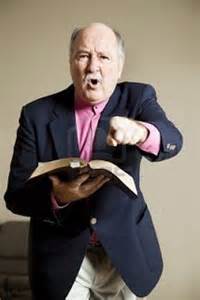
Which covenant do you think this guy is teaching?
Let’s get something straight about the old and new covenants before we move on.
The old covenant is not the same as the Old Testament, just as the new covenant isn’t related just to the New Testament. The old covenant isn’t before Christ, and the new covenant after. Actually both old and new covenants have been in operation all along because they are primarily two different ways of going about a relationship with God.
When Jews — or anyone else for that matter — try to follow the law, that is old covenant. When Abraham — or anyone else — was declared righteous by faith, as Paul talks about in Romans 5, that is new covenant.
We all experience the lure of the old covenant; we all try to better ourselves based on some external standard. We all try to please God by our actions and beliefs. At some point, hopefully, we discover the freedom of the new covenant: that everything comes to us by faith, because then it is brought about in our lives by the Holy Spirit.
At the same time, it’s not “once new covenant; always new covenant.” Since these are two ways of approaching God, we can go back and forth between them. As Paul once pointed out to the church in Galatia, “Are you so foolish? After beginning by means of the Spirit, are you now trying to finish by means of the flesh?” (Galatians 3:3)
So when Paul talks about consequences of the old covenant related to Moses and the children of Israel, that does not apply only to Jews; it applies to anyone who, at any time, is operating on the basis of the old covenant.
In a way, we could call the old covenant, the “first” covenant, because it is where we all start with God. The “first” covenant is the one that comes most naturally to us. That’s because we all grow up under a performance basis. We all start out fulfilling (or refusing to fulfill, if we are rebellious) the expectations of those in authority like our parents, teachers, coaches, etc.
Left to our own devices, we would actually all prefer the “first” covenant, even though it ultimately condemns us to death. We prefer it because it spells things out in black and white and keeps us in charge. We like being the judge of things. We like knowing where we are on the ladder of success. We like judging and comparing, and manipulating the standard so that we can follow it but others can’t. We love the “first” covenant because we can hide behind it.
The new, or “second” covenant may set us free, but it also leaves us vulnerable. It’s honest. It’s risky, because we’re trusting the Holy Spirit, not ourselves, and we never quite know what’s going to happen next.
The old or “first” covenant is all about control, and that is why Paul points out in our verses for today that the same veil that covered the face of Moses covers the face of anyone who tries to please God on the basis of the old way.
It’s pretty easy to figure out why. The old covenant requires us to follow all the laws laid out by God. However, because of sin in our lives, none of us is capable of doing this. Failing in one small thing makes you guilty of breaking the whole law. That’s the way it’s set up. No one actually believes they can do that, but the popular way to get around this is to tweak the law, as the Pharisees did, into something doable, albeit meticulous, but doable. Either way, the old covenant requires covering up the fact that we are not doing what we know is actually required of us.
Herein lies the beauty of the old covenant. We aren’t supposed to follow it! It was never intended to make us righteous. It was intended to show our unrighteousness and force us to throw ourselves on the mercy of God, which is exactly where He wants us. Paul says the law is the schoolmaster to lead us to Christ. The first covenant sets us up for the second.
As long as someone thinks they can obey all the law, they disqualify themselves for grace. The Pharisees short-circuit the process. The Pharisees turn out people who believe they don’t need the new covenant, and that is a terribly dangerous place to be. That’s why Jesus disliked the Pharisees so much. They were keeping people from the grace of God.
Lose the veil. Lose the thought that you might actually be able to please God with your actions or your good behavior. That kind of stuff will kill you. Give yourself up. Turn yourself in. Come clean with God, and those around you, and let God do His work in your life. That’s the new covenant. That’s the second covenant that you can find only when you fail the first one. Let’s get busy and fail so we can start to know the freedom and the power of God’s grace in our lives!
CLICK HERE FOR A FREE DOWNLOAD OF “WHAT HAS GONE WRONG” FROM JOHN’S “NEW COVENANT” MUSICAL
Day 10 Challenge:
Paul is using Moses and Israel as an illustration of something that is true for Christians.
Action items:
CLICK HERE TO RECORD YOUR ANSWER ON OUR FACEBOOK PAGE
Therefore, since we have such a hope, we are very bold. We are not like Moses, who would put a veil over his face to prevent the Israelites from seeing the end of what was passing away. (2 Corinthians 3:12-13)
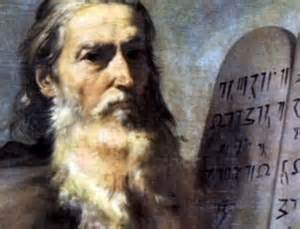
Plain old Moses.
This is one of the most surprising teachings in all of scripture. In it, Moses is cited as a bad example, and a truth from the Old Testament is boldly reinterpreted by Paul.
In order to get the full impact of this illustration, we need to return to the story in Exodus to which Paul is referring. Taken together, these two passages reveal one of the most practical aspects of the new covenant: what I would call vulnerable leadership. It also identifies the opposite truth about the old covenant: invulnerable leadership, and why it tends to be the more prevailing model even among Christians today who have the freedom of the new covenant available to them.
First, let’s look at the incident Paul is referring to, and then we will find out more about its significance.
When Moses came down from Mount Sinai with the two tablets of the covenant law in his hands, he was not aware that his face was radiant because he had spoken with the Lord. When Aaron and all the Israelites saw Moses, his face was radiant, and they were afraid to come near him. But Moses called to them; so Aaron and all the leaders of the community came back to him, and he spoke to them. Afterward all the Israelites came near him, and he gave them all the commands the Lord had given him on Mount Sinai. When Moses finished speaking to them, he put a veil over his face. (Exodus 34:29-33)
Here we clearly have Moses coming down from Mount Sinai where he has been in the presence of God and his face is still glowing from the engagement. The brightness on his face is so bright, it makes Aaron and the people afraid, so after speaking with them about all the the Lord had instructed him on the mountain, he put a veil over his face. We are not told why he put the veil on in the Exodus passage, but the assumption of the context makes it pretty obvious that he was toning down the brightness — making it possible for him to carry on his life among the people without subjecting them to this continual flood of glory from his face.
Continuing on with the Exodus passage, however, we find out something about the ongoing pattern of Moses’ behavior, that, when combined with the new information Paul reveals in 2 Corinthians, shows us why this veil became a symbol of fear and hiding even for Moses.
But whenever he entered the Lord’s presence to speak with him, he removed the veil until he came out. And when he came out and told the Israelites what he had been commanded, they saw that his face was radiant. Then Moses would put the veil back over his face until he went in to speak with the Lord. (Exodus 34:34,35)
This is a little different from the former verses. Notice the verbs indicate not just something Moses did once, but that he continued to do. Indeed, it indicates a pattern of his whole life. “Whenever he entered the Lord’s presence,” and “Moses would put the veil back over his face” indicate a way of life for Moses. Based on this, we can conclude that Moses wore the veil all the time, except for two recurring events: when he went in to speak with the Lord (which we know was once a year), and when he spoke to the people immediately after that. We can deduce from this, therefore, that the people saw the face of Moses only when it was radiant — immediately after being with the Lord — all the rest of the time, the face of Moses was veiled to them. Notice, this is not an assumption you have to stretch a little to make. It is very clear from the way the passage is worded that this was the pattern of Moses’ life.
So when we add Paul’s new information here — that instead of protecting the people from the glory on his face, he was actually protecting them from seeing that the glory didn’t last — a somewhat sinister plot emerges. Moses was basically living a lie. Since the people only saw Moses actual face when it was radiant, right after being with God, they would have assumed, quite simply, that it was bright all the time. (That was why he would only let them see his face right after he’d been with God — just to remind them how bright it was.) And yet, for most of that time, the glory had long faded away.
Notice Paul reveals he didn’t want them to see “the end of what was fading away.” Well, what was at the end of what was fading away? Moses. Plain old Moses. No brightness. No glory. Just Moses — an old guy getting older.
Now you don’t have to think too long about this to realize that the glory on the face of Moses gave him a sense of power and authority over the people. If your face was glowing like the sun when you spoke to people, they would probably listen to you. Moses was afraid that if they saw him without the glory, they would lose heart. They would think that God wasn’t with them anymore and he would lose his ability to lead them.
All I’ve had time to do, hopefully, is unpack this for you, today. The implications of this teaching are many, and the ramifications, significant. Please spend time with the questions below and over the next few days. You will see so much you haven’t already seen in your life if you do. Guaranteed. This is where this new covenant teaching starts to pick up steam.
Since the old covenant demands perfection and none of us is perfect, it will always make us cover up our inability to follow it, making us hide fearfully behind a false self we project to people that is no more than a veil over our true selves. And since the new covenant involves not trusting in ourselves anyway, we can be bold about who we are because we know Christ is in us. That is our hope.
Moses pretty much had no choice. He had to leave God on the mountain and do the best he could without Him. We have much better options. We have the Spirit of God in us. We can be unveiled and God will show up in our lives even if we aren’t perfect. This is why Paul says we don’t have to be like Moses.
CLICK HERE FOR A FREE DOWNLOAD OF “EVANGELICAL VEIL PRODUCTIONS!”
Day 9 Challenge:
Boldness is the mark of anyone trusting in the new covenant. We become bold or confident. We are open – right out front with nothing to hide. We are transparent.
Action items:
Respond to one or all of the questions below:
CLICK HERE TO RECORD YOUR ANSWER ON OUR FACEBOOK PAGE






 John Fischer The Catch