
Missed Opportunity
Now when I went to Troas to preach the gospel of Christ and found that the Lord had opened a door for me, I still had no peace of mind, because I did not find my brother Titus there. So I said goodbye to them and went on to Macedonia. But thanks be to God, who always leads us as captives in Christ’s triumphal procession and uses us to spread the aroma of the knowledge of him everywhere. (2 Corinthians 2:12-14)
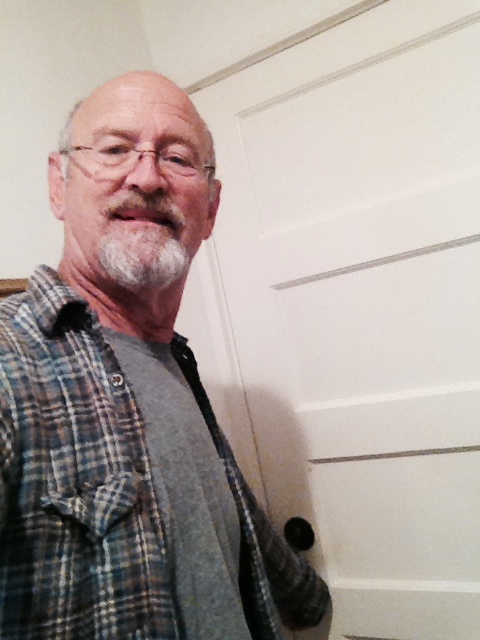
What is John doing here?
The new covenant begins in human failure. It begins at a place we can all claim. This opening example from the life of Paul, in itself, is a terribly freeing bit of good news. The new covenant operates in our lives, in spite of ourselves.
Who would start an important argument about winning his respect and favor with the people he was writing to with such a story of human frailty and inadequacy? Who would lead with a story of his or her own weakness, if it wasn’t someone who wanted to show that the new covenant doesn’t depend on us, it depends on God and His purpose in our lives, and He will accomplish His purposes even if we falter in delivering our part of the bargain?
It’s not a little bit from us and a little bit from God. It’s nothing from us and everything from God. This is and will always be the battle cry of the new covenant: Nothing from us; everything from God.
Do you think you can handle that? Do you see why this passage is so life-altering?
Paul’s first illustration is a story about human anxiety and missing an opportunity where God had clearly opened a door. Paul, on his journey to Macedonia, stopped in Troas for the sole purpose of preaching the gospel. But did he ever preach that gospel? No, he didn’t, even though the Lord had paved the way for him to do so.
There was a plan. Titus, his co-worker, was going to meet him in Troas and they would travel on together from there. Paul arrived in Troas and saw a wide-open door for ministry there, but his anxiety over not finding Titus made him unable to follow through with that ministry.
And here is the shocking part. What does Paul have to say for himself after revealing his error? “But thanks be to God, who always leads us as captives in Christ’s triumphal procession and uses us to spread the aroma of the knowledge of him everywhere.”
What? Are we reading from the right Bible here? Didn’t he just say he blew it when it came to ministering in Troas, and yet, in the next breath, he is praising God for always leading him in a sort of victory parade that spreads the fragrance of Christ wherever he goes? Doesn’t that sound like a disconnect to you?
It is a disconnect, except for the fact that the new covenant operates on an entirely different basis from how we would operate if we were in charge of things. How would I write it? I would have Paul apply his own words in Philippians 4:6 about not being anxious about his brother Titus, but by praying about it and “giving it to the Lord” he would have gone on to preach the gospel and thousands would have been saved, precisely because he had been filled with the peace that passes all understanding. That’s not only what should have happened; that’s biblical!
But our lives aren’t always biblical. We aren’t always able to do what the Bible says. Sometimes we can be overcome by human emotions and distance ourselves from the right answer. But never mind. God gets His will done anyway — with or without us. And not only that, He is still able to affect people through our lives anyway — even when we have taken ourselves out of the game.
Recently, Jered Weaver, ace pitcher for the Los Angeles Angels, an extremely competitive guy who hates to be taken out of games, took himself out of a game in the middle of the sixth inning because he knew he was out of gas — he didn’t have his usual stuff — and if he had stubbornly stayed in, he would have decreased his team’s chances of winning. Besides, there was a whole bullpen of fresh arms to come in and do the job.
He was expendable, and so are we. But get this: God uses us anyway, so that even in our failure and human limitations, we can thank God anyway.
Day 1 Challenge:
Briefly identify a time when you worked and worked on something, only to see it begin to unravel before your very eyes. How did you feel? (Like a failure? Anxious? Troubled?) What did you do? (Try to make right what was wrong? Stood frozen? Became sick to your stomach?)
Were you as frustrated and anxious as Paul was when looking for his friend so that you walked past an open door of someone needing understanding and insight?
We can all identify with Paul. Nothing is going well. I am frustrated. I am concerned. I am worried. And yet, Paul immediately reverses his position and rejoices.
Action Item:
Write about a time, or send us a picture of what you looked like, when you were so anxious about someone or something that you walked past an open door that you knew was meant for you to walk through.
CLICK HERE TO RECORD YOUR ANSWER ON OUR FACEBOOK PAGE









 John Fischer The Catch