A week of ThanksGIVING

Marti’s at it again. She wants you to do something daring and live to tell us about it. I know. I know how annoying it is to be pulled out of your comfort zone (I’m married to her, for heaven’s sake, I have to deal with this all the time), but it will be good for you. It always is. So in this week of Thanksgiving, Marti wants us to focus on the “giving” part of ThanksGIVING.

Have you ever met a person whose greatest need was anything other than real, unconditional love? There is no mistaking this love, it is the common fiber of life, the flame that heats our soul, energizes our spirit and supplies passion to our lives.

This love is found first in the Lord, then echoed in the simplicity of compassion we can show in a variety of ways to someone else, because God has shown it to us. Those who make compassion an essential part of their lives find what the Lord says is the joy of life.

Yet, with so much packed within our schedules, we can often overlook the many daily opportunities to give and to experience compassion.

Since there is no such thing as a small act of compassion (every act is like a ripple with no logical end), we are playing into God’s hand when we alleviate even one small burden from those around us who are carrying too much. While on earth, we will probably never know how far this chain reaction goes or how much of a difference it makes in someone’s life, but we will someday.

That is why over the next 6 days we are collecting everyone’s stories of compassion, stories where you stepped out beyond yourself to carry out an act of unconditional love and kindness towards someone else.

We want to create a ripple effect and thus have come up with some ideas to get you thinking about your story of compassion.

  1. Stop several times in a day to notice others and then go out of your way to be courteous to everyone around you. When you’re standing in line waiting to pay for your food at the grocery store or longing for the line at the Bank to move along faster before the money runs out, offer to let the person behind you go in front of you.
  2. Little girls love to become princesses like Cinderella by adding a tutu around their day-to-day clothing. The next time you see a little princess, step into her life of make-believe and ask for her autograph.
  3. Find someone who is overcoming barriers. Listen to his story. Tell him how you plan to apply his lesson to your life. There are people of all sizes and dispositions who are overcoming obstacles every day. It is a matter of looking for them. For example, a little girl stricken by cancer was recently asked how she stayed so positive. “Well” she said, “a little fishy told me to just keep swimming.” I am looking forward to telling her how I applied her fishy’s wise words to my life.
  4. The next time you stop into a casual restaurant, look for someone who is very lonely and sad or perhaps someone with visible disabilities that can be difficult for others to be near. Ask if you might join your new friend, promising that you will be good company by listening to her story.
  5. Give to men and women without homes a simple ‘care pack’ containing everyday accessories and toiletries like toothbrushes, toothpaste, soap, shampoo, and deodorant.
  6. Call your community shelter and ask if they need more cooked turkeys or side dishes for their Thanksgiving dinner. The answer undoubtedly will be “Yes!”
  7. We all know a Single Mom. She lives a life of multiple challenges. Help her with   simple considerations that are overwhelming. to her.  I’m especially conscious of Single Moms so have a few simple acts of kindness that can go a long way…
  8. Tell your single mom that she has the next Saturday off because you are  giving her children an entertaining day of fun. (The children won’t bite unless you bite first.)
  9. Single Moms have been rejected and in many cases betrayed. So don’t be surprised if she thinks if you are helping her it’s because you want something in return. She is suspicious of compassion.  Therefore, give a Single Mom your phone number and tell her to call if she needs someone to talk to or someone to visit when she is afraid. Just knowing there is someone to call can be everything to a Single Mom.
  10. From a Single Mom’s point of view, if you have the gift of fixing, God has favored you over all men and women. There isn’t a Single Mom who doesn’t have a dripping sink, a broken window, a busted safety lock, dead smoke alarm batteries, or service needed on her vehicle. The list is endless, but you need tend to only one “fix it” for her to love you forever.
  11. Find out something you are good at (tax preparation, accounting, head hunting, etc.) and make a commitment to use your talent to help at least one Single Mom.
  12. Invite her and her children for dinner. Make her dinner and bring it over when you see her drive in from work. Don’t stop to talk. She is tired and the kids are hungry.
  13. Invite her and her kids to join you for Thanksgiving dinner.
  14. Be the Walmart Greeter wherever you go. Hold a door open for someone and give them a smile. A small and unexpected gesture on your part will certainly brighten their day and may even turn around a bad mood.
  15. Get out of your comfort zone and make a friend. Introduce yourself to a stranger and strike up a conversation, or perhaps there is someone you’ve seen occasionally on the bus or in the neighborhood. Ask them how they’re doing. Find out what they think about the community, the school system – anything that you both might have in common.

Most of these examples are just simple acts of compassion – ways to make someone’s day memorable. After all, would you forget the stranger who went out of his or her way to make your day?

As we become acquainted with compassion, we learn new things and feel new feelings. Compassion is more than a thought, it is the conviction of the Spirit. That is why we want to know whether it was difficult for you to begin. Did you have to overcome fears before you could act? Was it unexpected? What was the response of the other and how did you feel? Did compassion deepen the spirit? Were there results?

As we hear from you, we will post your stories throughout this week and over the weekend. We welcome your story.

Marti

REMEMBER: BLOGTALKRADIO IS TONIGHT! (see below)

We think too much and feel too little. More than machinery, we need humanity. More than cleverness, we need kindness and gentleness. We need compassion.

– Charlie Chaplin (1889-1977)

Posted in Uncategorized | Tagged | Leave a comment

The American way of death

th-1What happens when you die?

It’s the most obvious, avoided question on record. Obvious, because there is a pretty high percentage rate of people who will have to face it. (Last I checked it was 100%.) Avoided, because if you don’t know the answer, or aren’t sure about it, it’s the last thing you want to face into.

I had to read a book for a sociology class in college called,  The American Way of Death by Jessica Mitford, published in 1963 and revisited in 1996. I love the New York Post review: “Brilliant … hilarious … A must-read for anyone planning to throw a funeral in their lifetime.” Mitford’s classic is about the funeral industry and how we spend most of our time and money pretending death doesn’t exist when we all know that it is the surest bet in life.

When the first man and woman let the DNA of sin loose on the human race, God had already pronounced the sentence:  “for in the day that you eat from [the tree] you will surely die” (Genesis 2:17), and sure enough, they did, and so has everyone since. The fact that we have 70, maybe 80 years at best to think about it doesn’t change the fact that it’s a done deal. The fact that we have a chance to think about it at all is nothing short of the grace of God.

Life is nothing but an extended death. Like the way everything slows down before a serious crash so that you have time to think about your options of survival and choose the best course of action, so God slowed down the death process to give us a chance to respond to the gift of life eternal He is offering through His son on the cross. This was the plan all along. God could have snuffed out the human race right then and there, but instead, His son became the lamb of God “slain from the foundation of the world” (Revelation 13:8). See, He had a solution in place before we even started.

Zombies are a big deal now in movies, television and video games. No wonder. Deep in our psyches we all know we are the walking dead. So you can do all kinds of wonderful and incredible things in your lifetime, but if you don’t do business with God over this one thing, it will all come to naught. You will have missed the reason you lived.

I taught about this yesterday to a group of Christians who acted like it was the first time they’d thought about it. Even believers are uncomfortable with this subject, when, in fact, it should be our favorite, because we, of all people, can answer the question.

Imagine having a strong, solid, knowledge, beyond the shadow of a doubt, what the answer to the question of death is. Imagine no more.

For we know that if the earthly tent [mortal body] we live in is destroyed, we have a building [resurrected body] from God, an eternal house in heaven, not built by human hands. (2 Corinthians 5:1)

Posted in Uncategorized | Tagged | 19 Comments

How to have a good testimony

thWell I’m not quite ready to let this “Always Christian” subject go yet when it still appears I am being misunderstood or probably more like it, I am not being clear enough about what I am saying.

I’m thankful to those of you who have taken part privately and publicly in this discussion, and especially to those who are having issues with what I’ve been saying this week, because that forces me to find other ways of saying it which in turn makes it clearer and gets me closer to communicating the message I’m really after.

If you just tuned in, it all started when someone questioned why those who have almost always been Christians appear to have less of a testimony than those who have had a dramatic turnaround from sin to salvation. I was quick to point out that they, in fact, did have less of a testimony, not because their sin was any less awful, but because they were being less than honest about themselves. We’ve hidden it behind the safer word “testimony,” but what we are doing here is what simply can’t be done, and that’s to compare sin. We are weighing sin and making conclusions about whose sin is worse, or who has more or less of it. This is not only impossible to do; it’s absurd, not to mention it’s also forbidden since it includes passing judgment which Jesus clearly told us not to do.

Whenever you find yourself comparing sin, I have one quick easy way out of that cul-de-sac: affirm the fact that the only comparison you can truthfully make about this is that your sin is worse than anybody else’s. It’s worse because it’s yours. You know all about it. You don’t know about anyone else’s sin, but you are an expert on your own, so call yourself the worse sinner out there and don’t go beyond that.

And here’s one more thing. You don’t have to have had a bad “before” to have a good testimony, just look at your life right now, and you’ve got enough sin to make up for any amount of pious upbringing you think you might have had. Anyone who thinks that there exists somewhere in the universe, or in time, or in their church or on their block a worse sinner than they are has not yet seen as they ought to see.

That can only mean everyone’s got a good testimony. Everyone has a great testimony on the sheer merit of the current sin in their life that they are being freed from continually, and for which they are receiving moment by moment forgiveness.

[Here are some selected thoughts from comments received this week.]

The false self we create (Thomas Merton and other contemplatives write about this) is such a huge detriment to living in truth, transparency and total dependence on the power of the Spirit. This is a timely word to a “lost” generation of “Always Christians.”

I never gave much grace away before I saw my total brokenness.

I only wish more “Always Christians” would have shared this with me over the years as I was beating my head against the wall trying to live up to unrealistic standards.

I think he [a one-time close friend] embraced an evangelical denomination as a means of dealing with his feelings of betrayal, and so has become very judgmental on the actions and attitudes of others. We used to be good friends, and I was there for him during his divorce, but now I avoid him whenever I can. I just don’t need a religious brow-beating.

spot001graphic

Posted in Uncategorized | Tagged | 10 Comments

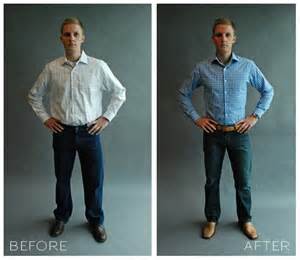
Before and after

th-6

I think I like the first guy better.

Some did not catch the hyperbole in my Catch on Tuesday about “Always Christians.” There is no such thing as an “Always Christian” since we are all born into sin (Psalm 51:5). The “Always Christian” I was writing about is the person, like me, who has been raised in a Christian home, taught the word of God from as early as they can remember anything, and pretty much accepted it as fact the whole way.

I was told I accepted Christ into my heart when I was five (by the way: “accepting Christ into your heart as your personal savior” is nowhere in the Bible; it’s strictly evangelical-speak), but I remember going forward at church after seeing a Billy Graham film when I was eight. I had no choice. I was sobbing. I also remember crying out to God when I was twenty-one, that if He was real I really needed Him to show up right then in my life. “Forget all the other times I called out to you: this one is for real. If you don’t answer me in some way right now, I’m going to go insane.” (And He did, by the way.)

So when did I actually become a Christian? When was my “before?” When I was three, seven, or twenty? For some people this can get a little ridiculous. I can never remember not wanting to please God. Others have a very real turning point. Their before and after are well defined. I don’t think this has to be the case, nor do I think it really matters.

I’m not so sure everyone can point to a moment in their life history when they were born again. I can’t. I can’t say when I became a Christian, I can only truly say I am one now. Today, I believe, and I definitely plan on believing tomorrow.

In the same way, I don’t believe that anyone can point to a time when they stopped sinning, as in: “I was a sinner and then I accepted Christ, and now I’m not a sinner any more.” Just as we are constantly experiencing our salvation, we are constantly experiencing our need for it. Want to see my current sin? Back up the dump truck; where would you like me to put this?

One of our readers felt I was being unfair to good Christian people who have always lived a life of “joyful obedience.” For instance, she pointed to her pastor’s wife who always wanted to know “if her testimony was less valuable than a person who had led a sinful life, then repented and came to Christ.” My answer to that is: Yes, her testimony is less valuable, because she has led a sinful life too, and she’s not being honest about it. Like Bob, the good Christian kid in the movie “The Big Kahuna” who says to his coworker, “You mean I have to do something I’ll regret in order to have character?” and his coworker answers, “No, Bob. You’ve done plenty of things to regret; you just don’t know what they are.”

That “Always Christian” Catch was for those who, like me, thought that they were Christians because they did all the right things, not because they are present tense sinners saved by grace.

My mother was an incredible Christian woman whose life could be characterized by all who knew her as a life of joyful obedience. If anyone could receive that accolade, it would have been her. Everyone looked up to her because of it. But I knew differently. I knew it wasn’t always joyful. And though I do think she live a life of obedience, I would have to say it was more often than not, a life of resentful obedience. Joyful to everyone out there, a different story on the inside. And how many know that story? Not enough, because of all those people who admired her, most of them also knew they could never live up to her example. I think of all those who praised her at her memorial service, and then went home to their own lives of quiet desperation, and how they could have been set free had they known the truth, that God could use them just like He used my mom, in spite of themselves.

Posted in Uncategorized | Tagged | 8 Comments

Keeping it real

12343fe

Dan Russell

There’s something to be said for consistency.

Consistency, but not stagnation. Consistency, but not status quo.

Everything I said in yesterday’s Catch was, and to an extent is still true about me. That’s how I know all about the pitfalls of being an “Always Christian” — in case you haven’t guessed — I am one. I couldn’t have written so easily about it if I hadn’t struggled with keeping my faith meaningful for most of my life.

I remember when as a college student I dedicated my life to Christ and to ministry, I made a deal with God. I don’t necessarily recommend making deals with God, but this one worked. (Actually, it’s not too uncommon in the scriptures: Moses, Jacob, and Hezekiah, just to name a few.) I told Him I would follow Him and give my life to serving Him as long as it could be real. I’d seen too much phoniness — too much hypocrisy.

He has been true to His side of the bargain, but I have also come to see that my side takes some fight. You have to struggle to keep it real — something this Catch blog and now radio show is dedicated to doing. We are fighting to keep our faith real. To be clear: we’re not fighting to earn our faith; we’re fighting through all the stuff that can crowd it out or make it lie down and go limp.

Faith is always fresh and vital, but it’s not going to stay that way without us being alert and awake to what can stand in its way, and stagnation, status quo, ease and comfort are some of the biggest hindrances to a vital faith.

I think there are a lot of you who are now a part of the Catch who may be “Always Christians,” and my guess is that you are with us because you, too, are fighters. You see that there is a version of Christianity rampant right now that does not require a fight. It asks for very little, in fact, beyond a commitment to a certain code and set of socio-political beliefs, many of which are extra-biblical. It requires conformity.

Here at the Catch, we’re a bunch of non-conformists, and it is my joy to be able to expose you to a lot of other non-conformists who are struggling to keep their faith vital. Last night, our fourth BlogTalkRadio show was no exception. Our guest, Dan Russell, was raised in a fundamental Christian home and has struggled all his life to keep his faith real.

Last night’s show was amazing. I am going to make it required listening for all of you. It’s an hour that will go by like a few minutes. If you have to, put it on while you fold your laundry or iron your clothes or paint your woodwork or put on your make-up, as long as it’s something that doesn’t take a lot of brain cells to do because you will need all available cells reporting for duty to keep up with this. Click on the BlogTalk link below to get to a

Dan's wife, Alison, some guy, brother Joel

Dan’s wife, Alison, some guy, brother Joel

recording of last night’s show, and then let me know what you think.

Consistency is the name of the game, but not blind consistency — not following the prevailing Christian suppositions without thinking or without continually checking the word of God and the Spirit of God in you to see if these things are true.

drbtr banner

Posted in Uncategorized | Tagged | Leave a comment

‘Always Christians’

th-3Let’s have just a little bit of sympathy now for “Always Christians.” Now that we have taken a look at the prisoners whose sin is ever before them — who wake up every morning with the grim reminder of what they have done and why they are paying for it — but who also in that environment, have the real advantage of truly knowing the freedom Christ brings through forgiveness and a new heart. In light of these realities, “Always Christians” have it pretty tough.

They never quite fully identify with the human race. There’s always been a little separation there — a notion in the back of their minds that they don’t belong with the worst of them, the ones Flannery O’Connor calls “white trash, clean for the first time in their lives … battalions of freaks and lunatics shouting and clapping and leaping like frogs.” No, “Always Christians” are the ones who “always had a little of everything and the God-given wit to use it right … accountable as they had always been for good order and common sense and respectable behavior.”

When the preacher talks about grace, “Always Christians” know that’s good news for them, but it’s even better news for everyone else. Intellectually they might know that nothing separates them from any other sinner, but they never really feel like any other sinner. They know that when it all shakes down, they will come out looking pretty good. They’ve always thought this way. Even if they tried to be a really bad sinner, it just wouldn’t take.

That’s why they are never fully convinced that their sin is just as bad as the other guy’s. And when the poor hungry bastards stand in the hand-out line for grace, “Always Christians” are more likely to be helping hand it out than receiving it. They just wouldn’t want to look that pathetic.

“Always Christians” love to quote John 3:16 and talk about the gospel for everyone else — how God has bridged the gap between us and Him, though they are never fully aware of what that gap is because “Always Christians” have always been on God’s side of things. They are in the inner circle. There are certain privileges.

“Always Christians” are positive … well, almost positive … they are on Team God, and that God is pleased to have them. They are the ones who will be seated in the roped-off section. They wear permanent name tags. After all, they didn’t just get here yesterday; they’ve been here all along. They have always been Christians; they can’t even remember a before.

So let’s have just a moment of silence for “Always Christians” who have served so well, but when everyone lines up to receive their salvation, can they really be sure they will get theirs? After trying so hard, that’s a tough place to be.

Posted in Uncategorized | Tagged , | 10 Comments

Behind bars

th-2Today’s thoughts come by way of one of our readers who spends a good deal of his time working with people in prison. What he finds out is that there is an advantage to being in prison when it comes to spiritual insight and daily walk.

First, you are at your worst. Certain conclusions about yourself are inevitable. It turns out these conclusions are actually true for all of us in a spiritual sense, but in prison they are obvious and unavoidable. “The best opportunity for God to demonstrate His grace and show Himself strong,” he writes, “is among the dysfunctional, weak, and hopelessly messed-up: people with major, impossible problems.” Well aren’t we all hopelessly messed up? We just have too many ways of hiding it out here, from ourselves and from others.

“We on the outside have it way too easy, and our ‘Christian lifestyle’ is too often simply the convenience and blessing of following spiritual laws that work, and not the product of being birthed (metamorphosed) into a new (spiritual) dimension through co-experiencing our death and resurrection with and in Christ.”

Indeed, this is the very thing we are learning right now from 2 Corinthians 4:8-12, that real ministry springs from sharing in both the death and resurrection of Christ. The death we experience every day in that we carry around the sentence of death in our bodies (the cross being God’s grand statement on the best we can do), so that we can experience his resurrection through the Spirit of God alive in our hearts every moment of every day.

“That’s why the New Testament teaches so much about the relationship between suffering and the kingdom of God,” our friend goes on the write. “Paul taught that ‘we must through many tribulations enter the kingdom of God’ (Acts 14:22). Why? Because in the ‘comfort zone’ we don’t really know ourselves, too easily misjudge and criticize others, and have little motivation to seek to be intimate with God or getting involved in helping others.”

He goes on to point out that the greatest challenge to prisoners who have become Christians behind bars and have grown through studying God’s word and spending time with other Christian inmates, is not the challenge of being in prison, but the challenge of getting out. Will they maintain their daily dependence upon Christ without the constant reminder the prison environment gives them of how much they need it?

As for you and me, who live very day in an illusion of being outside of prison bars, we would do well to visit and observe a prison ministry, take part in one, or at the least, imagine ourselves behind bars today, where we all deserve to be for what we have done, and then imagine our inner freedom in Christ — a freedom that defies those bars, real or imagined, with the presence and power of the Holy Spirit. That’s the only way we will begin to experience that spiritual metamorphosis our friend has written about. Transformation comes in going from death to life on a continuous basis.

We always carry around in our body the death of Jesus, so that the life of Jesus may also be revealed in our body. (2 Corinthians 4:10)

Posted in Uncategorized | Tagged | 4 Comments

Loving your non-Christian kids

th-1I woke up this morning with a thought I haven’t had before. I woke up thinking how hard it is for Christian parents to think about their kids as non-Christians. I speak at a lot of Christian colleges to Christian kids who never had an opportunity to be anything else. It’s probably why so many of them either struggle with their faith or throw it off later in life. It’s because their parents always thought they were Christians. I’m a Christian; of course my kids are going to be Christians. I’ll shoot them if they aren’t. They never affirmed them first as human beings with a free will, possession of their own soul, and with inalienable rights you would affirm for anyone (except maybe your own kids).

And that kind of thinking led to other thoughts — thoughts that should be helpful to you even if you are not a parent.

If there’s something about the way I think about or treat non-Christians that is unhealthy or inappropriate for my own children then there is something wrong about the way I think about and treat non-Christians. Similarly, I can probably get some pointers about how to think about and treat non-Christians by thinking how I would treat them if they were my own children.

So what would that look like?

Well, first and foremost, if my kids were non-Christians, I would have to learn to love them unconditionally. That goes without saying. Of course not every parent can do this, but that’s at least the ideal. You love them. You love them if they get in trouble and go to jail. You love them if they get pregnant or get somebody pregnant. You love them if they do drugs. You love them if they sneak out at night. You love them if they do poorly in school. You love them if they become somebody you don’t like. You love them no matter what, and nothing they can say or do will ever change that.

Secondly, you affirm them for who they are. They are their own unique persons. They are not extensions of you because they bear your name. You don’t force them to become something they are not; you find out who they are and help them to become more of that. If your son wants to become an auto mechanic you don’t send him to law school. You do whatever you can to help him become the best auto mechanic in town.

Third, you affirm their search. You don’t expect them to walk and talk like Christians when they are not yet Christians. You affirm what they think. You find out what that is instead of forcing or assuming your thoughts on them. You give credibly to the path they have chosen even if you wouldn’t choose it for yourself.

Fourth, you treat their belief — whatever they believe — as one of their most valued possessions. You guard their own soul as something to be prized, and you help them keep their soul free.

And finally, you pray for them like hell. You know you can’t make them a Christian; it’s going to have to come from their heart, and you have nothing to do with their heart. But God does. So you pray like hell.

Hopefully you understand that this Catch is not about how to treat your kids. It’s about how to treat your neighbors. I can’t tell you how to be a better parent because I’m barely hanging on at the job. Go to BetterDads.net to find out more about that, or listen to our archived radio interview with Rick Johnson. But do take these thoughts and apply them to your neighbors, friends, and coworkers who are not believers, at least not yet. If you give them this kind of love, respect and support for who they are, they will be much more likely to become Christians than if you beat them over the head with your own belief, or worse yet, with a Bible.

become a mmbr bannerdrbtr banneronrwG banner

Posted in Uncategorized | Tagged | 5 Comments

Lunch with Mike

th“John, I have lunch with you daily,” writes Mike, one of our regular readers. “I set my iPad mini on my desk and have a dialog with you as I read ‘The Catch.’  The question of the hidden leader is close to my heart. Churches expect their pastors to be perfect examples of humanity: flawless and untainted by the world. What they get is someone who is always careful what to say and in the manner in which it is delivered. Many times when a pastor is willing to be real in front of his congregation they are offended by the honesty. Having made mistakes as a pastor and having a congregation unwilling to accept a pastor living “unveiled” as in the description of Moses from 2 Corinthians, I have witnessed hypocrisy within the body of Christ like I have never seen outside the church. The thing I discovered that God was doing with me was to thrust me into a situation that would lead to my failure as a pastor to get my attention, teach me a lesson and aim me in His direction for me. Preparation, so to speak, for the next stop on my journey.

“Leadership isn’t for the faint hearted. Symptomatic of our times is the lack of qualified servant-hearted leaders. It is true in the church as well as locally, nationally and even internationally. The best and brightest avoid it, so what we are left with is a second string ill equipped to lead us. My ministry has been in the public high school for the past 14 years as band director. I am retiring at the end of this school year and wondering where He will be sending me next.”

You broke the code, Mike – the unwritten rule that living under the old covenant requires. It requires a cover-up. Your carefully guarded persona is what allowed everyone else to hide, too. And everyone gets comfortable with that low level of exposure and becomes resistant to any kind of openness or disclosure.

God obviously wanted to take that body somewhere they were unwilling to go, starting with you. When a leader breaks the code, it implicates everybody. They saw your vulnerability and went, “Nope … not for us. We’re not going to go there.” This sounds like an old covenant church on the brink of new covenant miracles, but they shut the door on them. They shut the door on your leadership that would have taken them there, and on their own adventure of finding Christ’s power made perfect in weakness.

Meanwhile, it looks as if God lead you outside the church, and that is no less of a place of leadership as you have no doubt found out. You may have accomplished more as a public high school band director than you could as a pastor. My high school band director had a profound influence on my life. He pushed me beyond my limits and gave me opportunities that helped shape my character in a significant way. You are bringing the kingdom of God on earth without the religious fanfare.

And I love the way you are looking at the future. “I am wondering where He will be sending me next.” That is a statement of hope, expectation and adventure. The new covenant always leads somewhere you haven’t been before, otherwise we would be in charge.

All the best to you, Mike! Oh … and thanks for bringing us to lunch with you!

We had an incredible time interviewing bestselling author
Rick Johnson on our new BlogTalkRadio show.
Listen here http://bit.ly/HNDC7E

Posted in Uncategorized | Tagged , | 4 Comments

The last Great Man

th-6It was said a number of times during the excellent PBS two-part series on John F. Kennedy, whose assassination took place 50 years ago this month, that he led with the Great Man theory. That is: it takes greatness to run the party and the country – that the President of the United States needs to be a little bit better, sharper, healthier, wiser than the average man, and to a point you could say he was successful. Kennedy embodied what the new generation admired: health, vigor, optimism and compassion. What has come to light since then is a different picture of him, and this documentary was quick to point out that Kennedy was also secretly characterized by a constant womanizing that flew in the face of his family man image, and the fact that this vigorous, healthy man was actually constantly in physical pain, and it took a plethora of pain killers and multiple injections of cortisone to keep him appearing to be active.

In this he was just like Moses “who would put a veil over his face to prevent the Israelites from seeing the end of what was passing away” (2 Corinthians 3:13). Both of them had something to hide, and they hid it for much the same reason: they didn’t want the people to see weakness and lose faith in their leadership. They felt they needed to be looked up to in order to run the nation.

Now, when it appears the main goal of the press is not to protect our leaders but to bring them down, even the slightest dalliance will make the front page news. All the Presidents since Kennedy have been hounded by lies, incrimination, cover-up, ineptness, posturing and scandal. It could even be argued that Kennedy’s greatness was preserved by his assassination. We eventually would have found out the truth about the man. Cut down in his vigor, he will always be remembered that way in our minds. We can’t even picture an old, declining JFK.

Yet even though these things remain to be true today, the Great Man theory of leadership still remains, and the saddest part is that it is alive and well in the church. The Great Man theory continues to be the rise and fall of many pastors and Christian leaders.

This, in spite of the fact that the first part of  the verse about Moses states: “Therefore, since we have such a hope, we are very bold. We are not like Moses…” (2 Corinthians 3:12). Paul, the writer, uses Moses as a bad example. He uses Moses as an example of what we don’t have to be. We don’t have to hide our weaknesses or our failings or our human limitations, even our sins. We are not great men; we are not preaching ourselves; we are not a cut above everyone else; we are not infallible. We are common breakable jars of clay in whom the greatness of God dwells. Paul would say, “Don’t look up to me; look through to Christ.”

The Great Man theory of leadership requires cover-up and an early death to maintain the myth. The new way requires men and women to be available to be used by God in whatever state of being they happen to be at the moment. And as far as an early death is concerned, there’s truth in that, too. Paul would say that we carry around the death of Christ in our bodies anyway, so that the life of Christ might be seen in and through our mortal existence (2 Corinthians 4:10-12).

“Don’t look up to me; look through to Christ.” That’s the new model of leadership. It’s not a Great Man we follow; it’s a Great God.

Posted in Uncategorized | Tagged | 2 Comments