Arms up

th-3I was so excited when I found this picture for yesterday’s Catch that I needed an excuse to post it again so I could write about it. It’s such a grand statement of the natural cathedral of God’s creation. No church building can top this – the trees standing like giants with their arms up in continual praise, and the man, seemingly oblivious to it all, walking his dog along the path, his way shrouded in fog. He may not even be able to see the natural sweep of the branches we can see from the camera’s eye.

Is the man praising God as we are when we see this picture? Is his eye swept upward to where the branches go?

Praise is not something we are told to do as much as it is something we are expected to do. It is assumed that if we live and breathe, we will recognize our being in God. Paul addressed the intellectuals and philosophers in Athens with this assumption when he wrote: “The God who made the world and everything in it is the Lord of heaven and earth and does not live in temples built by hands. And He is not served by human hands, as if He needed anything, because He himself gives all men life and breath and everything else … ‘For in Him we live and move and have our being.’ As some of your own poets have said, ‘We are His offspring.’” (Acts 17:24-28)

If we are His offspring, then we praise Him for no other reason than He is our creator. Quite simply, the truth about our relationship requires it. When we praise, we are merely – and in some cases, finally – fitting into things as they really are. We are not adding anything to our life or to God when we praise Him as much as we are aligning ourselves correctly with the universe and our place in it.

Imagine the man in this picture echoing the trees with his arms up and you get a physical picture of where our souls should be all the time. In Him the man in this picture lives and moves and has his being. He may or may not be aware of it in the moment, but there is no doubt that the trees get it. The dog too.

Posted in Uncategorized | Tagged | 1 Comment

Why worship?

If I speak in the tongues of men or of angels, but do not have love, I am only a resounding gong or a clanging cymbal. (1 Corinthians 13:1)

th-3As it turns out, praising God isn’t such a big deal after all.

If the heavens are telling the glory of God and the earth is showing forth His handiwork, if day to day pours forth speech and night to night reveals knowledge, if rocks would cry out at the hindrance of the children’s free and natural praise should the Son of God walk by, then, as the highest form of His created order, for us not to praise Him would be the ultimate arrogance, and to think that praising Him is serving Him in some way as if He needed it, or as if we were doing Him a favor, is to approach Him with an arrogance of no less magnitude.

At the risk of sounding anti-praise, I am merely wondering if praise might have replaced other more important things as the desirable thing to pursue when it should be nothing more than a given. Has praise become the new darling of the church — something to busy ourselves with while skirting other more demanding calls of God? Is it now praise instead of love that covers over a multitude of sins? Is it now faith, hope and love that remain, but the greatest of these is praise? It does appear sometimes that no matter what we are doing wrong, praise will somehow make it right, and yet the Old Testament is full of God’s weariness with lips that praise Him while hearts are far away from Him and feet are quick to do evil.

Praise is important, but not something to make such a big deal about when everything else God created is already engaged in the moment by moment expression of this through their being as a natural course of events. Let’s worship Him, but let’s not blow any big horns over it. Let’s worship Him, but let’s not presume to ever be giving Him anything more than what He is due.

We don’t enter into praise for what we will get out of it, or what God will get out of it. We praise simply because it is right and reasonable to do so. To attach anything more to this is to presume undue importance upon ourselves.

Besides, we could worship God with tongues of men and even angels, but if we are lacking in just one thing called love – something that seems to be harder to find among Christians lately than it is to find praise — then Paul says that all the praise in the world isn’t going to amount to a hill of beans.

Posted in Uncategorized | Tagged | 11 Comments

Judgment call

I’m not so sure I would have let me go.

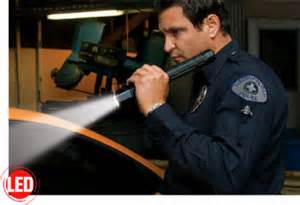
th-2I walked around the corner of my garage this morning at 4:42 a.m. to find two very powerful police flashlights trained on me. They had gotten a 911 call from Chandler’s cell phone, and even though I tried to tell the emergency operator it was a false alarm, I knew they would come anyway. They had to come, and probably nothing I could do or say would have stopped them from coming. What if I had a victim trapped in the house who had managed to dial 911 before I commandeered the phone and told the operator it was a false alarm? Would I trust me?

It all started at 4:30 a.m. when my cell phone alarm went off but it wouldn’t let me get past the lock mode. Every time I tried my password it failed; plus, there was a weird picture on the screen I had never seen before. Had I dropped my phone one too many times and now it was frozen? I turned it off and back on — a move that usually fixes a frozen state, but it came back with the same picture and would not take my password. That’s when I noticed a button in the lower right corner for emergency calls. Thinking it was most certainly frozen and not able to deliver that call, I punched it out of curiosity and the call went through. “O (bleep), now what do I do?”

I tried to stop the call but it was too late. I could hear the voice of the operator asking if I was all right. Was there an emergency? Why did I dial 911?  And then: “If you are in trouble, just tap the phone.” That’s when I knew I had to answer, but when I did, and I tried to explain why, I sounded pretty lame to myself. Then she read my phone number back to me and it was not my number. All I could say was “My phone’s all screwed up.” And then she asked for my address. Of course I gave it to her but I could see where this was going. “There’s no need to send anyone out here. Everything’s all right; it was just a false alarm.” Yeah, sure!

By now Marti was awake, and as I tried to tell her what was going on, I realized I had the wrong phone. This wasn’t my phone; it was Chandler’s phone. No wonder the password didn’t work but the call did. Marti tried to get me to call back on my phone, but I knew it was useless. What could I say that would remove all doubt? Wouldn’t they have to check to be sure? And when I started out front and saw the flashlight beams, I knew I was right.

They asked me what was going on. They asked me about the cell phone. They asked me who was in the house. They asked me about the cars out front. They explained how in domestic cases it was common for the perpetrator to come out and try to stop them from going in, and because of that, they were going to have to go through the house just to make sure. I understood all of that, but couldn’t think of anything I could say that would make them trust me. I imagined everyone awakened. I imagined the dogs going nuts. I imagined the neighbors going nuts over the dogs going nuts. I imagined the neighbors seeing me out front being detained by the cops. None of this was good.

That’s when everything switched. It must have been something I said, or something about my body language that gave away my stupidity, but one of them decided to make a “judgment call” and call off the search. And then, as quick as God’s grace, they were gone.

Relieved, I went back in the house, but as they drove away, I wondered if I would have trusted me.

Grace and mercy are pretty downright amazing. Imagine you standing before a perfect, holy and righteous God. Knowing who you are and what you have done, if you were God, would you let you go?

Posted in Uncategorized | 7 Comments

Post-Christian coffeehouse

th-1Yesterday I talked about one of my heroes, whom I met for the first time last Sunday, and how, upon meeting him, I discovered, lo and behold, that apparently I was one of his heroes. That led to some thoughts about how everyone has heroes and everyone is a hero to someone.

In this particular case, my hero was Chap Clark, Associate Provost of Regional Campuses and Special Projects and professor of youth, family, and culture at Fuller Theological Seminary, Pasadena, California, but I chose not to mention his name and very long title because the point of that writing was not who he is or what he does, but who we are to each other. To him, I was the rock star of his teen years, to me, he was one of the few people I had read who could beautifully articulate sacred moments in secular places. Chap would get all exited about the Christian guy who wanted to reach his community by starting a Christian coffeehouse until he realized his neighborhood already had one and maybe he should just go there.

I did imbed a link to Chap’s website in his picture in yesterday’s Catch, but I didn’t tell anybody that. I thought it would be a fun discovery for those who like to snoop around with their cursers. However, I got a number of emails from those who know Chap and were a little put out that I didn’t mention his name, and those who didn’t know him but wanted to know who he was. That’s certainly understandable, and that’s why I decided to identify him today. Today I decided to share him with you; yesterday I wanted to keep him to myself.

Marti and I were talking last night about the early 1970s when it seemed as if everyone you met wanted to know about Jesus, and why it’s so different now. Well, I think I know why. I think everyone is a little sick of Jesus (obviously not the right Jesus because you couldn’t possibly be sick of the right Jesus even if you didn’t like Him), and they are most certainly sick of Christians, because we took center stage and used it for all the wrong reasons. We didn’t listen to the guy Chap would have liked, and built our own Christian coffeehouses anyway, and now all the Christians go there.

It’s a different world now. It’s a post-Christian world. Billy Graham’s already been through town, and Christians have already had their 15 minutes of allotted fame; now it’s time to get down to living in our neighborhoods with Christ in our hearts. Start (or continue) getting on boards and committees to fix things and volunteering in your communities. Start (or continue) meeting over coffee, or what have you, and getting to know your neighbors at whatever coffeehouse they’ll go to. Start (or continue) making and building relationships with non-Christians. It’s going to be done in the trenches, and labels don’t mean anything anymore (they never did). My friend and hero, Chap Clark, would like that, too.

Posted in Uncategorized | Tagged , , | 3 Comments

A hero’s welcome

th-2I met one of my heroes yesterday. The church I attended had a guest speaker I was eager to hear and meet. He has been one of my favorite commentators on Christianity and culture for many years and I have quoted him on numerous occasions. I once wrote him to thank him for being such an important spokesperson for living out the truth in the real world. Here is a man for whom there is no separation of sacred and secular, instead, God has shown him how to think in such a way as to sanctify everything and pass on that ability to others. So it was with great admiration that I went up afterwards to meet him and thank him personally for what his work had meant to me.

I was so focused on this that it caught me off guard when, upon hearing my name, he welcomed me as celebrity, and introduced me to everyone around him as his hero. Apparently my music had had a significant influence on his early years, and that letter I sent so many years ago has been a treasured encouragement ever since. Hearing this made me think of a letter I once received from the late Herb Caen, revered columnist for the San Francisco Chronicle, admiring my book that I had sent him because it had a piece about him in it. That was a letter from my hero saying, “Nice job.” I still have that letter in a frame.

So there we were, mutual heroes meeting for the first time.

It makes me wonder now if all our encounters couldn’t be like this, for isn’t there a way that we are all heroes to someone? So when I meet you, I meet a hero. Why are we heroes? It’s not because of us anyway; it’s because of what God has done for us and through us. We have merely received from Him what we have passed on to someone else, but in that exchange, we became important as a conduit of truth and love. So in reality, this wasn’t a mutual appreciation society meeting as much as it was a worship moment — a time to thank God for each other.

Think of who has been an influence in your life. Write them a letter today and tell them so. You never now how important that could be.

And then let’s think of everyone we meet today as if they were a hero … because they are.

Posted in Uncategorized | 6 Comments

Handful of thorns

th-7I once cared for a trellis of wild roses along one side of a stone wall in front of our Massachusetts house. Every spring the plants needed to be weeded and cut back to encourage blooming. Long strands of thick, thorny shoots that bore no flower had to be pruned out leaving the softer, younger plants full of buds to receive all the attention. The thorny stems constantly fought with me, poking through leather gloves and ripping open the plastic lawn and leaf bags I tried to force them into. My hands were puffy for days after this ordeal, and my arms, a road map of scratches.

It is in caring for love that a man experiences his deepest pain. Men are, by nature, irresponsible. To look after a woman in the same manner in which he looks after his own needs and wants is a severe test for any man.

Most men think they got something when they got married, few see marriage in terms of what they give up, and yet this is the fundamental truth for which marriage is the prime human example. “Husbands love your wives, just as Christ loved the church and gave himself up for her to make her holy” (Ephesians 5:25).

What does it mean for a man to give himself up for his wife? For Jesus Christ it meant losing his reputation and becoming a servant. It meant humbling himself and becoming obedient to something other than his own interests. For God to lose his reputation and give up the honor due him is no small thing. For a man, it means he foregoes his need for attention and focuses his attention onto his wife. He is over all his insecurities and need for approval. If he never got it, then he is over never getting it. If he got too much, then he is over being special. He does not allow self-indulgence; he lives for someone else. Whether he got praise or didn’t get praise, it doesn’t matter since he sees himself as a servant either way. He is a giver of praise not a praise-seeker. Here is a man whose wife is more important than his reputation. And to get to this place is painful. None of this comes naturally. For Jesus, it came by way of a cross.

No man can expect any less painful a path.

Love is a rose but you better not pick it
Only grows when it’s on the vine
Handful of thorns and you know you’ve missed it
Lose your love when you say the word, “Mine.”
– Neil Young

“Only grows when it’s on the vine.” This is different from the rose a man might bring his wife on a special day (any day, for that matter). That rose has been picked, but his wife is growing in her own garden. You don’t “pick” this rose, you care for the whole plant. You tend to the soil, water it, weed it, and sometimes get scratched up in the process. You don’t “pick” your wife’s beauty. You don’t cut her off at the stem and put her on display. You come to her garden where she is growing and blooming. You appreciate her source of life and you give life to it.

As much as I like this song by Neil Young (most of us know the Linda Ronstadt version), I must take issue with the last two lines. Grabbing a handful of thorns is not proof that you missed it. On the contrary, it is probably the first indication that you’ve really got something there.

In the popular book, The Notebook by Nicholas Sparks, Noah Calhoun has to learn to cope with his wife’s Alzheimer’s disease — the thief of hearts, souls and memories. Whenever he tries to get near his beloved — to take the flower in his arms again — he is stabbed by an armful of thorns. She does not know him. She distrusts him. She is belligerent with him. She is beyond his reach. But Noah has discovered that to love is to lose oneself, and so all his attentions are given over to loving this woman who does not know him anymore, whatever the cost. Meticulously, sometimes painfully, he discovers the love he has had for her all along is enough for the two of them. Sometimes he gets more thorns than flowers, but one whiff of a bloom is enough to keep him going. It is a tender story of how far love can go no matter how thorny the path.

And finally, you don’t lose your love when you say the word “Mine,” as long as you mean by that: My responsibility. My job. My sacrifice. My woman to win, even if it means over and over again.

Posted in Uncategorized | 5 Comments

Love is a rose

If you can’t handle thorns, how can you ever expect to hold a woman?

th-6A rose is an odd mismatch of beauty and pain and yet God blends these two things
together in the same plant. This cannot be a mistake – an oversight along the
production line of creation. Roses were meant to come out this way. To
entangle their beauty and delicacy in a maize of twisted barbed wire. Perhaps
to protect as much as anything. Perhaps to injure those who try to approach
the beauty carelessly, or even those who are careful, for love is never
without injury.

Love means to be misunderstood.
Love means being rejected.
Love means the things that are important to you will not always be
treated by another with the same value and care that you put to them.
Love means sacrifice.
Love means being vulnerable and being vulnerable almost always means you
will get hurt.

Love means giving up yourself — having your selfishness torn from you in a
manner that leaves you defenseless. This is perhaps the most painful of all
the activities of love, since we are all so protective of ourselves. We have
all found comfort in ourselves — in our own ways of doing things. The
proverbial marital battle over how to properly squeeze toothpaste out of a
tube is not insignificant. It is a small picture of the larger struggles of
ways and means.

There is comfort in the self. With years of self-talk, we have talked
ourselves out of our guilt and our shame. We have developed ways of dodging
the truth that shield us from truth’s double-edged probing. We can perpetuate
almost any reality in our own minds. In the safety of our own personal
self-propaganda, there is no one to challenge us, no one to disagree.
Elaborate schemes and intricate systems of rationalization go uncontested.
And since we will stop at nothing to ensure our own comfort, we will learn
little of love should we remain invulnerable.

But it is a thin membrane that protects the self, and love’s thorns can
puncture it with ease and tear it open. This is the painful service that love
provides for us: it strips away our protective layer leaving us open to both
hurt and love, and since we are human and fallible, we cannot love without
hurting or be loved without being hurt.

Hold the rose and feel the thorns.
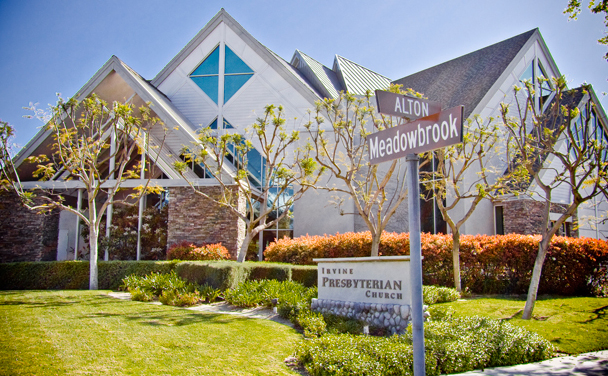
Next week will be week three in a five-part series on “What is Worship?” I am teaching in an adult education class at Irvine Presbyterian Church, 4445 Alton Parkway, Irvine, California. The class is in the Jack Davis room at 9 a.m. on Sundays. Those of you in southern California are invited to attend. We’re over a little after 10:00 so you might have time to get to your own church service, or you are certainly welcome to attend the morning service at IPC at 10:30 a.m.. The sessions are being recorded so if the rest of you would like to listen in, the audio can be found by clicking HEREHope to see some of you there next Sunday.

Posted in Uncategorized | 4 Comments

Church of the Open Door

th-5Marti’s “Call to failure” Catch yesterday quickly found a home. Many of you have commented both online and privately through email about how this Catch connected. It should be no surprise. Church is home for bad people. Jesus didn’t come for good people. He made that very clear. And yet why does it seem that every time we talk like this our message appears radical or edgy? It should not be this way. This should be the most obvious thing about the church – a daily fresh astonishment.

Church is a place where everyone is welcome but no one deserves to be. Church should be a place that is bathed in grace. Everyone there, from the pastors to the congregation, should be in a perpetual state of amazement that they actually get to be there. No one ever gets to a point where they think differently about this. If they do, their thinking is wrong.

How damaging is this best-foot-forward prevailing thinking in Christendom, when the bottom line of church is the love and acceptance of forgiven sinners? Damaging enough to undermine our message. This is the day of salvation. This is the open door policy. This is the gospel of welcome.

We have gotten away from the fact that church is for sinners most likely because we have failed to be honest about our own ongoing sinfulness. Sinners are only tolerated on the other side of salvation. Once you are saved, you are expected to not be sinning anymore, so there is a good deal of hiding going on in most churches. If the gospel welcomes a sinner like me, it welcomes anyone. This is the way we need to think.

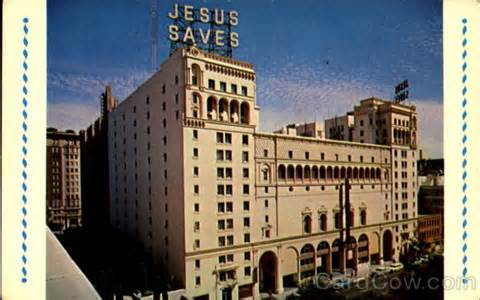
I grew up listening to J. Vernon McGee from the Church of the Open Door in downtown Los Angeles – the one with the neon “Jesus Saves” sign. Now the sign has been relocated to another downtown building (it’s close to “Hollywood” status as a Los Angeles icon), but the church building, which used to seat up to 4,000 people was torn down over 25 years ago. The church itself has been relocated to Glendora and still goes by the same name, but its legacy as an open door for sinners in downtown Los Angeles is no longer a presence.

There is something sad about that, and something that needs to be resurrected, if not in name, at least in practice, although I love the name, too. It seems to me every Christian church should be the Church of the Open Door. The doors of the true body of Christ are open to anyone and everyone. And they need to stay open.

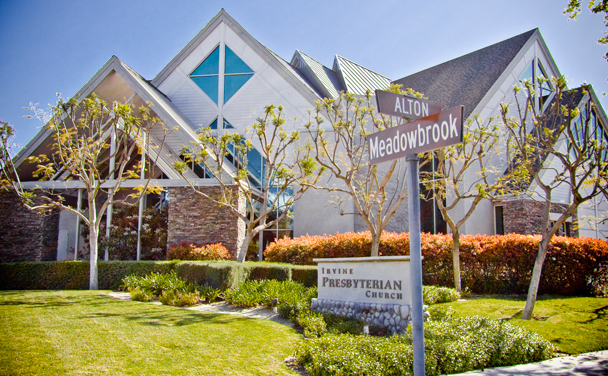
ipcNext week will be week three in a five-part series on “What is Worship?” I am teaching in an adult education class at Irvine Presbyterian Church, 4445 Alton Parkway, Irvine, California. The class is in the Jack Davis room at 9 a.m. on Sundays. Those of you in southern California are invited to attend. We’re over a little after 10:00 so you might have time to get to your own church service, or you are certainly welcome to attend the morning service at IPC at 10:30 a.m.. The sessions are being recorded so if the rest of you would like to listen in, the audio can be found by clicking HERE. Hope to see some of you there next Sunday.

Posted in Uncategorized | Tagged , | 8 Comments

Call to failure

th-4In Dr. Seuss’ children’s classic, The Cat in the Hat, there are two “Things” that cause havoc in the house while Mom is away. I speculated a little about Thing #1 yesterday, but today, with Marti’s help, we’re letting them both loose, and then, just like the Cat in the Hat, Marti will blow through here with her cleanup contraption that will hopefully make some sense of it all.

I have been hiding my failures by sequestering myself inside my own pain. To be sure, in public I will greet you with a huge smile and a feigning but compelling attitude of interest in how you are. You may with all sincerity inquire of my life and I will say, “I am fine. I am all right. I absolutely couldn’t be better.” If pressed to continue, I will tell you of the successes in my life, how wonderful everything is, and yes, how everyone is doing so very well, thank you.

My failures I’d rather forget, yet in the forgetting, I am left isolated. Missed opportunities, stupid choices, and bloody mistakes cause horrifically condemning feelings and agonizing thoughts of regret. These thoughts and feelings work overtime in my mind, causing me to be intimidated by my own shadow, let alone people I regard and respect. Everyone looks bigger than me, and certainly always better than me. So I work even harder to put “my best foot forward,” which is always followed by feelings of inadequacy and a sense of not measuring up to anyone except those I consider less than me. I retreat. I cannot pay attention to my heart and it is longing to be touched. No, not even love can call me out of this fearful place until I rarely go out at all.

And in this place of self-condemnation, I can always find pleasure in dwelling on the failures of others. I may have made “errors in judgement,” but I did not fail like (s)he did. So why am I feeling weak and small? Why do I need to leave every time (s)he comes in the room? Why do I need to find someplace safe? Why doesn’t (s)he hide in isolation and why is it me that is afraid to venture out?

What releases me from the grip of these debilitating thoughts is a growing realization of how God actually uses failure in my life to accomplish His purposes. That’s when I find out that, lo and behold, I am called to failure. Thing #1 and Thing #2 have wreaked havoc in th-2my life, but God is pulling a cat out of the hat. He has a way of making sense of this mess in a way that makes use of my failures — indeed, is not possible without them.

I think it is the poetic genius of the Lord to choose to use my deficiencies and failures to enable me “to find the heart of man,” where His love interrupts the consequences of my actions and thus is able to connect with other’s feelings. This is Grace in action; right before our very eyes, grace is defying reason and logic, where empathy flows freely to others who like me know they have failed. It is pretty easy to be there for someone who is a looser like you, to accept them as they are and love them like no other can.

I am called to failure.

To regret is to isolate my heart. To regret is to agonize over previous catastrophes and megaflops, where memories continue to intimidate. To regret is to turn away from love. To regret is feel so inadequate that you are too afraid to venture out.

To accept failure is to know love and give life. It means accepting the things that have happened and the things that I have done as simple evidence that I cannot make it on my own. I cannot even put my “best foot forward” without stumbling. To accept failure is to know that I am very good at blowing it and He is very good at using it. I am weak; He is strong; and it is by His strength through my weakness that He expresses such unfathomable power through His free flowing grace to me, and then outwards through me to others with His great compassion, sensitivity, wisdom and understanding.

My failures are redeemed and put to God’s intended purpose, making my failure no longer ruinous. Rather, I am called to failure and owe much to each day that I fail. The lessons that I learn in my failures, “are worth the price of the gale,” as expressed in this beautiful lyric by George Matheson (1842-1906) Scottish theologian, preacher and hymn writer.

A Call to Failure

I had a call to a mission,
          Signed in my heart and sealed,
And I felt my success was certain,
          And the end seemed already revealed;
The sea was without a murmur,
          Unwrinkled its even flow,
And I heard the master commanding,
          And I was constrained to go.
 
But out from the peaceful haven,
          There woke a terrible storm,
And the waves around were in chaos,
          And the land appeared without form
And I stretched my hands to the Father
          And cried in a chilling fear,
“Didst not Thou pledge Thy presence!
          And naught but failure is here!”
 
Then in the midst of the thunder
          There rose a still, small voice,
Clear through the roar of the waters,
          Deep through their deafening noise:
“Have I no calls to failure!
          Have I no blessing for loss!
Must not the way to thy mission
          Lie through the path of thy cross?”
 
It came as a revelation
          It was worth the price of the gale;
To know that the souls that conquer
          Must at first be the souls that fail.
To know that where strength is baffled
          I have reached the common ground
Where the highest meet with the lowly
          Where the heart of man is found
 
For the wings of the storm that smote me
          Were the wings of humanity’s breast
As it moved on the face of the waters
          And sighed for an ark of rest.
O door of the heart’s communion
          My Father gave me the key
When he called me out to the ocean,
          And summoned the storm to me.

ipcNext week will be week three in a five-part series on “What is Worship?” I am teaching in an adult education class at Irvine Presbyterian Church, 4445 Alton Parkway, Irvine, California. The class is in the Jack Davis room at 9 a.m. on Sundays. Those of you in southern California are invited to attend. We’re over a little after 10:00 so you might have time to get to your own church service, or you are certainly welcome to attend the morning service at IPC at 10:30 a.m.. The sessions are being recorded so if the rest of you would like to listen in, the audio can be found by clicking HERE. Hope to see some of you there next Sunday.


Posted in Uncategorized | Tagged , , , | 6 Comments

Everything else

th-1I call it the One Thing Syndrome. It’s that one thing in your life that if you could fix, you would have most, if not all your problems solved. It can be anything – a bad habit, a disability, a secret sin, a mental disorder – but the one requirement is that it bears the weight of everything else in your life that is not right. What it turns out to be is one big excuse. Believe me, I know of what I speak. I could tell you what my Thing 1 is but, it doesn’t matter. The important thing is for you to think about yours and not turn it into a convenient scapegoat.

It’s a lie. It’s debilitating. It’s what the enemy uses to render us powerless to change. Change doesn’t happen over night. Change is a process over time. We’re not talking about winning the spiritual lottery here; we’re talking about overcoming, little by little, step by step.

The One Thing Syndrome means you don’t have to pay attention to anything else. It’s like the cripple who spent his whole life by the pool of Siloam, unable to jump in and be healed when an angel stirred the water because someone would always beat him in. If it ever occurred to him to go home and get on with his life as a cripple (If God wants to the heal me, fine, but I’m not going to put the rest of my life on hold waiting to find out), he chose not to do that. It was easier to make this one thing the reason nothing else was possible.

I’m thinking of Joni Eareckson Tada, paralyzed from the neck down as a teenager, and accomplishing what few have been able to do with all their facilities in good working order. She writes, she speaks, she paints, she inspires and she has formed an organization to help others cope with similar struggles. You don’t see her sitting by the pool waiting for angels.

This is not to say that God can’t give healing or victory over that one thing – He may choose to do that – it means that we will not use that one thing as an excuse to not do anything else.

I would venture to guess that we all, to one degree or another, have that one thing that is keeping us from growing. I would like to suggest today, that instead of spending another day trying to do something about that one thing, that we call on the Holy Spirit to help us pay attention to everything else. Leave that one thing to God. He’s the only one who can do anything about it anyway.

Posted in Uncategorized | 3 Comments