
Exclamation mark faith!

thSo after the period, the comma and the question mark of faith, I think you can see where this is going. Certainly not to the colon; that only creates abdominal pain. And the semicolon is not much different since no one can agree on where and when you should use it. The ellipsis and the dash are all about personal preference which leaves us with — you guessed it — the exclamation mark. Though the exclamation mark is rarely used in formal writing, it is one of the most popular punctuations in handwriting used for emphasis. We use it to set off something we really mean. We use it to show excitement. And we use it to emphasize a point, sort of like a super-period.

As in: “For no matter how many promises God has made, they are ‘Yes(!)’ in Christ” (2 Corinthians 1:20). Okay, I added it there, but it might as well be there. How can you not get excited about God’s promises being true in Christ! Jesus is the “Yes!” of God’s promises. The law is all about “No!” Christ is all about “Yes!”

Hope is the exclamation mark of faith. How else can you capture the fact that it is all true? Forgiveness, love and mercy are all ours.

Exclamation mark faith is alive. It is engaged. It is a life awake to the Holy Spirit. It is a Spirit-controlled life — life with an exclamation point.

My wife will tell you — because she has to live with me — that I don’t know very much about this exclamation mark faith. I’m too cerebral. I think too much. I’m only writing about this. It’s true. My exclamation point is on stage, and sometimes when I write, but most of the time it’s dullsville around me. I need help here, people. Don’t let me get away without this. Those of you with exclamation point faith, let me know how you do it. I need more “Yes!” and less “No!” in my life.

Join me here. Find your exclamation point in life. Get out of the doldrums. Christ has come that we might have life and have it more abundantly (John 10:10). Sounds like an exclamation mark to me!

If you, then, though you are evil, know how to give good gifts to your children, how much more will your Father in heaven give good gifts to those who ask him! (Matthew 7:11). And in my version of the Bible, that exclamation mark is really there.

Posted in Uncategorized | 11 Comments

Question mark faith

imgresSo far we’ve talked about the commas and the periods of truth — the fact that truth is both the final word (the period at the end of the sentence), and the ongoing, unfolding experience of it (the commas that keep the sentence going). However, in this use of the metaphor of punctuation we are leaving out perhaps the most important punctuation mark in the seeking and the knowing of God … the question mark.

Questions are essential to both the statements and the experience of God. I once counted over 250 question marks in the book of Job with almost a hundred of those being found in God’s “answer” to the questions Job and his friends raised. Yes, God answered their questions with more questions that left at least Job humbled and repentant.

Question marks show the limitations of our humanity. We don’t always get it; we can’t see the whole picture; we wonder about even the existence of God since no one we know has actually seen Him; and we wonder about what has happened to us. How can anyone explain what has happened to them in terms of an all-knowing, all-powerful, all-loving God without the use of questions? (And haven’t I just asked on there? …and there? …and so it goes.)

How can you believe without questions? You can’t. You can’t unless you live in a good deal of denial and you close your mind to the questions of others. Questions are important in the process of coming to know God, but they are also an important part of faith once you come to know Him. Yes, faith is full of question marks. It wouldn’t be real otherwise. There are times when we have much to say — when commas and periods abound — but then there are times when only question marks can contain the reality of our experience of God.

Question marks are what allow us to come alongside someone else and share in their journey. To throw someone a bunch of periods when all they have are questions is to not only be insensitive to their need, it is to miss the opportunity of discovery. It is denying someone else the process you most likely allowed yourself and indeed, you still have, were you being completely honest.

Questions are what keep us human. Questions are the essence of worship, where God Himself becomes our answer, and does that mean questions cease once you have Him? No. They may even increase, because once you have His heart, you care even more. Questions and God go hand in hand. Anyone who tells you otherwise is cutting off their arm.

Posted in Uncategorized | 7 Comments

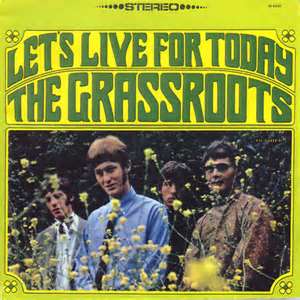
‘Sha-la-la-la-la-la live for today’

thMarti was elated yesterday to discover that God favors the comma — that we have a tendency to want to put periods where commas should be. Marti saw yesterday’s Catch as a huge affirmation for her and her writing. That’s because life for Marti is one big run-on sentence.

Undoubtedly those of you who have been regular readers of the Catch for some time have become accustomed to recognizing Marti’s writing. She loves long sentences. She loves things to go on and on and on. She jumps from one thing to another without warning. That’s because her mind is racing ten times faster than she can write and she doesn’t have the patience to take you from one thought to the next; you’re supposed to catch up to her. Read her mind. Join her at her pace. Come on folks, life is happening here, and you don’t want to miss anything!

And you say you have a hard time reading Marti’s writing? You should have seen it before you got it. I am Marti’s heavy-handed editor. I have to come at her stuff with a machete, and I have to slow her down long enough to have her tell me what she meant by such and such. (She doesn’t like to have to explain herself; I’m just supposed to get it.) This is a slow, sometimes painful process, having to go back and extract her thoughts about something she put into writing a few minutes ago. She’s well past that now.

Marti hates periods. She never wants anything to end. She has little interest in end times prophesy, and eternity is not a major motivation for her. Marti is a heaven-can-wait  kind of person. Unless, of course, you are talking about heaven as another dimension to life which we can experience right now. Like in Ephesians where it says we are seated right now with Christ in the heavenlies. She’s all over that. She thinks Christians spend much to much time on eternity. As if the song were “Sha-la-la-la-la-la live for tomorrow.” Her favorite verse is 2 Corinthians 6:2, “Behold, now is the acceptable time, behold, now is the day of salvation.”

Me, I like short, choppy sentences. I could communicate find without commas. Marti could communicate fine without periods. Let life run. On and on. Experience it. Follow it. Learn from it. Come on people, let’s go!

Posted in Uncategorized | 3 Comments

Holy punctution!

imgresNever place a period where God has placed a comma. – Gracie Allen

comma n. a punctuation mark indicating a pause between parts of a sentence, or dividing items in a list.

period n. used at the end of a sentence, etc., to indicate finality, absoluteness.

We are always trying to put periods where commas should be. We want questions answered. We want absolutes. We want procedures and steps that gain the same results for everyone. We want truth to be something you can describe in black and white. We want to know who is who before the book is closed. And we like rules. Even though we would never say we were legalists, everything boils down to ways in which we measure ourselves compared to those around us. When truth is only a period, we have no patience for the process.

Having grown up in the faith, I can truthfully say that God was usually presented as the period at the end of every sentence — the alpha and omega, the beginning and the end, and so He is. But He is also the comma between all things. He is the pause that lingers in the middle. Our daily experience of God would be much more like that of a comma. Periods come at the end, but we are not there yet.

Celebrate the comma of truth today – the pieces you are finding in the world, the part which means there is still more coming, the characteristics of God that go on and on and need commas to list them. Celebrate the commas in our lives — the processes by which we come to know things, and celebrate that process in others. Appreciate them for where they are, realizing there are many commas yet to come.

Don’t close the book when God still has it open.

Posted in Uncategorized | Leave a comment

What price change?

Modern FamilyChange always means adjusting to what’s uncomfortable. All change, even for the good, is upsetting.

It is a big responsibility to be well. There is a story in the New Testament where Jesus heals a man possessed by a legion of demons who, when facing expulsion by Jesus, ask to be sent into a herd of 2,000 pigs. Jesus grants their request and the whole herd rushes headlong into the sea and drowns. You might think the town would be happy to be rid of this menacing madman, but that’s not the case.

“A crowd soon gathered around Jesus, but they were frightened when they saw the man who had been demon possessed, for he was sitting there fully clothed and perfectly sane. Those who had seen what happened to the man and to the pigs told everyone about it, and the crowd began pleading with Jesus to go away and leave them alone.” (Mark 5:15-17)

Although at first it sounds odd that they would want Jesus to go away after healing someone, I don’t have to think very far past my own dysfunctions to understand this. The demon-possessed guy belongs in the graveyard, screaming, breaking his chains, and terrorizing the neighborhood, and the pigs belong on the hillside gently grazing. This is definitely a codependent town, comfortable with its accepted blend of sickness and tranquility.

Until Jesus comes and messes everything up. Jesus is threatening to everything we hold dear, especially the things that are bad for us.

We received a new board game over Christmas called “DysFUNction.” It’s a game centered on telling the most dysfunctional stories on your family and friends. The funniest and most dysfunctional stories gain the most points, and points are rewarded by receive more baggage. The person with the most baggage wins. Now what does that tell you about being dysfunctional if someone can create a game around it? The comment on the outside of the box say it all: “The only condition to play is the human condition.” This is obviously everybody’s problem.

He can make us well, you know, but it’s going to mean change. You and I have to decide if we want that. Do you want to get rid of the raving lunatic in the graveyard of your life, or would you prefer to keep things as they are and send Jesus away? You can’t have it both ways.

This story has taught me that it’s going to cost something to have Jesus in my life. If I’ve been thinking I can just coast along with my dysfunctions (after all everyone’s human), and keep Jesus around, I’ve got another thing coming.

Posted in Uncategorized | 4 Comments

The music of a revolution

Yours truly.

Yours truly.

Well, I honestly didn’t mean to go any further with the All Saved Freak Band thing until I decided to try to see if I could find a song on YouTube and got suddenly re-immersed into a dazzling display of funky, pure, unadulterated, raw Jesus Music of the early 1970s.

This was before Christian music was contemporary and Christian radio played it.

Before tours and contracts,
Before careers and airplay,
Before Perrier in the dressing room,
Before Christian promoters, producers, and roadies,
Before Christian busses and semis and record execs,
Before Christian was an adjective,
Before worship was music,
Before Moral was a Majority and Christian was a Coalition,
Before Christian became politics,
Before we knew what we were doing… there was Jesus music.

Jesus music was rough and unruly. It was offensive. It was locked out of most churches and happening on the street. No one asked; they just did it. Musicians were preachers and preachers were evangelists. And freaks got saved.

There was no plan. There were no credentials. There was the Holy Spirit, and the Holy Spirit was a little wild.

This wasn’t premeditated, packaged or marketed. There was no strategy. This was people getting plugged into Jesus and plugging in their guitars. It wasn’t perfect. It was raw. It was what a revolution is like.

But then again you had to have been there.

Make no mistake: this is not nostalgia. This is to ask the question: “What could happen now?”

For a real treat, and to see what I mean, enjoyDaughter of Zionby the All Saved Freak Band.

Posted in Uncategorized | 6 Comments

What is that in your hand?

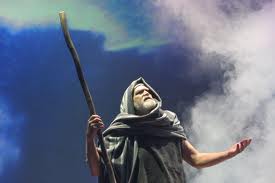
moses w:staff“What do you have there in your hand?” (Exodus 4:2 NLT)

Anyone familiar with the calling of Moses by God to be the one to free his people from Egypt knows that calling took place amidst a long litany of excuses and objections on Moses’ part. It is such a human story full of excuses, insecurity and fear.

“But who am I to appear before Pharaoh?” (Exodus 3:11)
“How do you expect me to lead the Israelites out of Egypt?” (3:11)
“They won’t believe me.” (3:13; 4:1)
“O Lord… I’m clumsy with my words.” (4:10)
“Lord, please! Send someone else.” (4:13)

Any of these sound familiar? It’s hard to believe that with this feeble beginning, God turned Moses into one of His greatest leaders. It just goes to show that serving God doesn’t depend on great things from us; it depends on our availability to a great God.

This has been God’s strategy from the beginning — to pick ordinary, fallible people like you and me, and do great things through them by faith. I don’t know how we miss this so often, but we do. The Old Testament is riddled with people like this. We often think that we could never be like other people God is using mightily, when, if truth were known, they probably feel just as insecure as we do. Greatness, in God’s book, is not a measure of our natural abilities as much as it is a measure of our courage to believe God is with us in our weakness.

Still, God will use what we offer of ourselves, but only after we give it over to Him. I believe that is what the shepherd’s staff Moses carried around represented – something Moses had been leaning on all his life. God asked him to throw it on the ground and when he did, it immediately turned into a serpent. Then He told him to pick it up again (that would have been the hardest part!) and it turned back into a staff. (This little trick would later come in very handy when Moses was tested by Pharaoh and his magicians.)

When we give up what we have in our hand — the few things we do have that we have come to trust — then God can turn even these things into something He can use for His purposes. He can start the miracle.

What’s in your hand? What have you been leaning on all these years? Is it a natural ability? Is it a drug? Is it something you’re good at? Is it your reputation (or lack of one)? Is it your excuse or excuses (I’ve got lots of those)? Throw it down. Whatever it is, throw it down. It will most likely turn into something scary that God will ask you to pick back up, but that’s where the miracle begins.

Posted in Uncategorized | 2 Comments

To love like God

God is loveDoes God only love Christians?

Does this question even need to be asked? Unfortunately, yes, because there is an impression out there that that He does. I encounter it in innuendo and assumption. I used to encounter it in myself and the attitudes caught from a strongly Pharisaical upbringing, and I have found it to be an attitude that is hard to get rid of.

The way this usually works out is that God doesn’t love anyone I don’t love, and the human inclination is to not love anyone who is not like me. That makes God’s love an extension of myself, instead of the way it should be, with me as an extension of God and His love. I have much to learn about God’s love. God is love; I am not. I am the one who needs to change. I am the one who needs to learn to love like God.

“God is love” (1 John 4:16), says John. God is synonymous with love. How could God not love His entire creation? It is His nature to love.

“God so loved the world that He gave…” (John 3:16).

The tragedy of God’s love is that it is not universally received. “He came to that which was his own, but his own did not receive him” (John 1:11).  What a tragedy. Do you think God feels that tragedy? Personally, I think that is why the prophet Isaiah called Him a man of sorrows and acquainted with grief. That is why Jesus wept over Jerusalem because He wanted to gather everyone up and bring them to Himself, but they would not all come.

How is it that God being God would create a world where His love was limited by the free will of those He created, making Him appear helpless to do anything about those who would reject Him? I honestly do not know how this works, but I do know God feels these feelings because He has expressed them in the inspired scriptures handed down to us.

My point today is not to enter into a theological debate over this, because that is where these discussions often lead, but to capture some of the nature of God in His love for us and suggest that we should at least share in these same attitudes and emotions, primarily that we should be governed more by the tragedy of those who reject God’s love than in their judgment or their wrong doing.

Do we weep or do we condemn? If you ever catch yourself shaking your head in judgment and condemnation, stop. Stop judging and weep instead. That’s what God did, and He even has the right to judge (and will someday). The cross has put that judgment aside so that He can love. Can we do any less?

So if you love like God, you will love and hurt at the same time.

Posted in Uncategorized | 10 Comments

Modern day Amos

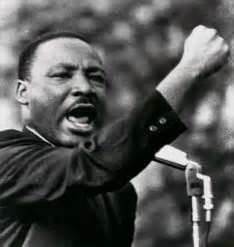
MLKHow much easier it is to judge what is different or differentiate what we don’t understand than to benefit from from the truth it holds. I’m thinking, today especially, about my knowledge and understanding of Martin Luther King, Jr. as a white bread person growing up in a Christian environment. Though he was a pastor, I would never think of him in the same camp with my pastors growing up. Though he was an evangelist, I would never put him in the same sentence with Billy Graham. And though he boldly addressed the materialism, conformity to the world and injustice of the current church in America, I would have never seen him as a modern day Old Testament prophet like Amos, though I do now.

Why? Was it his color? Was it the nearness to violence (though never embraced)? Was it his reputation as a womanizer that made us write him off? I’m sure it was all of these things, but it pains me today that I am more familiar with his affairs than his sermons. He was different. He was scary. He was controversial. He was confrontational. He was passionate. He rang the bell of justice and equality, and he spoke of a love that gave human dignity to everyone regardless of difference. I wonder if Jesus showed up today as He did when He came, how many of us would write Him off because He didn’t look and sound like an evangelical? No doubt He would be different. His sermons wouldn’t go over well in many of today’s churches.

So lets look at one of the sermons of Martin Luther King and see what it might say to us today. The following is taken from just one sermon, “Paul’s Letter to American Christians,” delivered at Dexter Avenue Baptist Church, Montgomery, Alabama, on November 4, 1956.

I am afraid that many among you are more concerned about making a living than making a life. You are prone to judge the success of your profession by the index of your salary and the size of the wheel base on your automobile, rather than the quality of your service to humanity.

Through your scientific genius you have made of the world a neighborhood, but through your moral and spiritual genius you have failed to make of it a brotherhood.

For so many of you morality is merely group consensus. In your modern sociological lingo, the mores are accepted as the right ways. You have unconsciously come to believe that right is discovered by taking a sort of Gallup poll of the majority opinion.

You must face the tragic fact that when you stand at 11:00 on Sunday morning to sing “All Hail the Power of Jesus Name” and “Dear Lord and Father of all Mankind,” you stand in the most segregated hour of Christian America.

As you press on for justice, be sure to move with dignity and discipline, using only the weapon of love. Let no man pull you so low as to hate him.

“But let justice roll down like waters and righteousness like an ever-flowing stream.” (Amos 5:24)

Posted in Uncategorized | 21 Comments

Hole in whose heart?

Sigmund Freud's couch

Sigmund Freud’s couch

The Lord was grieved that he had made man on the earth, and his heart was filled with pain. Genesis 6:6

We can bring God joy, and we can bring him sadness and pain. It’s pretty amazing when you consider the fact that we have this kind of power. We can, in our own words, make or mess up God’s day.

I recently had a spiritual mentor tell me to spend some time ministering to the Lord. At first that sounded a bit ostentatious, that I could minister to Him, as if He needed anything. Well, it’s true, He doesn’t need anything, but still He made us to reach out to Him and perhaps find Him. To do so, He would have had to make Himself vulnerable to the process He created.

Sometimes I wonder if God didn’t purposely create a need in Himself for us when He made us, thus making Him open to both the pain and the joy of a relationship. When God saw that it wasn’t good for Adam to be alone could that not have mirrored His own aloneness? In Eve, He gave both Adam and Himself a bride – one that through sin and rebellion would cause Him great joy and great pain.

When working on my first novel (Saint Ben) it was this very idea that provided the grist for the story when I discovered what happens when you take the Pascalian idea of a God-shaped vacuum in every human heart and turn it around. That’s when I came up with a Ben-shaped hole in the heart of God, just the size to fit Ben Beamering’s ornery, non-conforming self.

In watching the play last night, Freud’s Last Session, a hypothetical conversation between an angry, atheistic, sick and dying Sigmund Freud and a young, passionate newly converted C.S. Lewis, the God-shaped vacuum in both their hearts and their conversation was plainly evident. But you also can’t walk away from this riveting performance without a sense that God must have a big hole in His heart in the shape of both of these men whether they found out about it or not.

[God] is patient with you, not wanting anyone to perish, but everyone to come to repentance. (2 Peter 3:9)

Posted in Uncategorized | 5 Comments