Just do it

House on the sand (hearing and not doing)

Therefore everyone who hears these words of mine and acts on them, may be compared to a wise man who built his house on the rock. (Matthew 7:24)

Well it’s been quite a week, especially for those in the northeastern United States who have been in the wide swath of hurricane Sandy. (I’m sure there are some from our membership who have experienced loss. You have our prayers.)

Meanwhile, here at the Catch we have been inspired by Marti to jump out of the phone booth as Superman, to fly like Peter Pan to where God is, to love like my newly married son, and to take a sword to our fleshy sin nature that keeps us from walking in newness of life in the Spirit. Now it only remains to be done – to be acted on in the trenches.

All these things are well and good, but they mean nothing if there is no action. They are all inspiration for doing, but the doing must be done.

No one is better at talking about doing something, and never doing it, than Christians. It’s part of our evangelical training. God forbid that someone would listen to a sermon and go out and actually do something about it! That would break the unwritten code about hearing without doing – something that Jesus said was as foolish as building a house on sand.

Oh, Christians talk the truth well enough. We talk around it, underneath and above it. We dissect its pieces and stand guard to make sure everyone else divides it up properly. We try to “one up” the other guy with our new feel-good spiritual nuggets. None of which amounts to a hill of beans if we don’t put into practice what is being revealed.

It’s time to ride in, slay the dragon and rescue the princess. Or to put it into spiritual terms, it’s time to obey. What is the Lord telling you to do? Write it down. Tell it to Marti or me if you need a witness. Most of our lists will be simple to say, not easy to do, but that’s why we have a cape, wings, love and a sword, all provided by the Spirit to put to use when obeying God. Go ahead; do it. It should be a good weekend.

Posted in Uncategorized | 1 Comment

Inigo’s revenge

“Hello, my name is Inigo Montoya. You killed my father. Prepare to die.”

In one of the most memorable scenes from “The Princess Bride,” Inigo Montoya, Westley’s match with the sword turned ally against the evil Prince Humperdinck, finally gets his revenge against the six-fingered swordsman who killed his father. His whole life has been preparing for this moment, and he succeeds, even though he takes a sword to the chest. Staggering and holding back the blood with one hand he defends himself with the other. He does this by repeating what has become his mantra: “Hello, my name is Inigo Montoya. You killed my father. Prepare to die.” Softly at first, then gaining strength from his resolve each time he says it, he suddenly turns the aggressor, all the while repeating, “My name is Inigo Montoya. You killed my father. Prepare to die.” Until his opponent, master swordsman of the evil Humperdinck cries out, “Stop saying that!”

Finally unhanded by Inigo, the swordsman offers him anything he wants in exchange for his life and Inigo runs him through proclaiming the only thing he wants he can never receive… his father back.

It’s an unforgettable picture of courage and determination that could be brought to mind in our struggle against our greatest enemy… ourselves.

This recent Catch series began with Marti burying me next to my father. That was not a show of disrespect, but an acknowledgment that we all participate in some way in the sins of our fathers – particular weaknesses of the flesh against which we struggle. The only way out is to put the old self to death, as Paul says in Romans 6:11, “count yourselves dead to sin but alive to God in Christ Jesus.” And with even stronger language two chapters later he writes: “For if you live according to the flesh, you will die; but if by the Spirit you put to death the misdeeds of the body, you will live” (Romans 8:13).

“You put to death…” that sounds an awful lot like running that guy through, and “that guy” is of course ourselves, i.e. our selfish selves, our lazy selves, or our disobedient selves, or for us husbands, it’s any part of ourselves that keeps us from loving the wife of our youth. Put it to death. Run it through. Don’t let anything stop you.

And if it helps, you might try something like: “Hello, my name is the born again John Fischer. You represent the sins of my father. Prepare to die!” or “Hello, my name is John Fischer. You are the little man keeping me from the big plans God has for me. Prepare to die!” or “Hello, my name is John Fischer. You are personal indulgence against the will of my Father in heaven. Prepare to die!” Put anything you need victory over in there, and run it through in the power of the Spirit.

Of course, in the story, Inigo secured only his revenge – a sort of hollow victory in that it can’t bring back what he really wants. Our stakes are much higher and long lasting – good for eternity, a life of purpose, the love of our families and the salvation of many.

Posted in Uncategorized | Tagged , | Leave a comment

True love: a modern fairy tale

Originally this story was going to be about the Princess Elizabeth (So beautiful that the sun itself continues to be astonished whenever it shines in her face) and the Frog (splish splash, splish splash) Christopher.

Reading over my shoulder, however, was my new daughter strongly objecting, “My husband is not a frog!”

“No?” I asked. “Then who is he?”

“My husband is…” she announced as though in the great hall of the castle with trumpet fanfare, “My Snuggy.”

“As you wish, Princess Elizabeth. This rewrite is for you:”

This is not just your basic, average, everyday, ordinary, run-of-the-mill, ho-hum fairy tale. This is a story of true love.

Once upon a time in a land with no beginning or end, there was a Prince who was very handsome with a smile that made any sad day happy. His eyes were kind and beautiful. His heart was always extended to others and he had a finesse in binding diverse empires together.

Friends from neighboring castles knew the Prince sometimes as a candle in the night that ignited the things that are unseen. They also knew him as mischievous, sometimes hiding among the tapestries at court, and chasing everyone through the formal gardens with stolen pastries, and mudding their vestments behind the lower pools making mud hens. Prince Christopher, for this is what we are to call him, wholeheartedly loved God and life.

While rich with relationships, however, Prince Christopher was very unhappy. Most of his lifetime friends had found their mates, so where was his love – his true love?

One night there flew over the castle a little swallow. Her friends had gone away, but she had stayed behind, for she was in love. It was early in the spring when she had spotted him in the village. She was so attracted to him that she swooped down to talk to him.

Prince Christopher was held in awe as she flapped to rest on his extended hand. He held her lightly. She was radiant; she was like life-giving goodness.

The Prince invited her into the light and she took her place.  And oh how he loved her, saying “Don’t you know I love you? I lay my heart at the foot of your … dress?” For as only can happen in fairy tales, the swallow had transformed into a majestic and arresting Princess, now gazing on him saying, “Don’t you know that storybook loves always have a happy ending?”

They exchanged bands of gold to be laid round each other’s hearts – forever one.
Then he swooped her up, just like in the books and on his stallion they rode away.

For all their tomorrows ever after, they lived happily together, their lives living the story of love and hope.

*****

Now this did happen once upon a time not to long ago. Perhaps when things were not so complex. But – oh, don’t you remember your Princess Bride and how you worshiped the ground she walked on? Your love was like a storybook story – but it was as real as the feeling you feel.

Yes. Life is complicated and there are many errors to overcome. Yet for the sake of your love for the Lord, the relationship between you and your mate, and the kingdom of God, you might want to take heed from the fifth-century B.C. prophet Malachi, who was greatly concerned about the loss of love among the Israelites as especially found between husbands and wives.  Their love for God and thus for each other had grown cold, making it near impossible to respond to the Lord’s love, thus disintegrating their home life to the nothingness – flat and meaningless with little if any shared sense of aliveness, power and purpose.

Consider reading the entire book, but for now I will leave you with only 2 verses and a plan for a happy ending.

Malachi, Chapter 2; 13-14:
Another thing you do: You flood the Lord’s altar with tears. You weep and wail because He no longer looks with favor on your offerings or accepts them with pleasure from your hands. You ask, “Why?” It is because the Lord is the witness between you and the wife of your youth. You have been unfaithful to her, though she is your partner, the wife of your marriage covenant.

And now a happily ever after plan for you and your mate as written by Prince Christopher and Princess Elizabeth on their Wedding Day:

To “Buggy” (by Prince Christopher)
My heart became whole on the day I met you. You’re the answer to every prayer I’ve ever prayed. I can’t wait to grow with you both in God’s love and then our love. Thank you for making my dreams come true. I wuv you with all of my heart.

To “Snuggy” (by Princess Elizabeth)
I have waited and prayed for this moment my whole life and I am in awe of the man that God created for me. My heart has found its home with you and in that home I know it’s safe. I can’t wait to spend the rest of my life loving you.

Prince Christopher: Hear this now: I will always come for you.
Princess Elizabeth: But how can you be sure?
Prince Christopher: This is true love – you think this happens every day?

Since the invention of the kiss, there have only been five kisses that were rated the most passionate, the most pure. This one left them all behind.


Posted in Uncategorized | 2 Comments

The gospel according to Peter Pan

I am a believer in the power of fairy tales. There are spiritual messages hidden in them, where the simplicity of a childhood tale often communicates profound wisdom about life and God.

My favorite is one of the most enduring of all children’s stories since it first appeared on stage in London a century ago.  After all these years, Peter Pan still has the power to captivate us – well… at least me, anyway. Peter is an orphaned boy who lives in a realm of white jungles and legendary mysteries of eternal youth with his nemesis, Captain Hook, and the ragamuffin lost boys who consider that growing old somewhere in time could be less important than growing up, right here in their new home called Neverland.

Jesus spoke of a kind of everlasting childhood when He called us to be never-ending children in our relationship with God.  “Unless you turn and become like children, you will never enter the kingdom of heaven,” Jesus says (Matthew 18:2). This requires us to discontinue our self-independence and acknowledge our complete dependence on God, putting aside cynicism for wonder.

Having drunk the poison intended for Peter, Tinker Bell’s wings can scarcely carry her. Peter kneels near her in distress. Every moment her light is growing fainter and he knows that if it goes out she will be no more. Her voice is so low that at first he cannot make out anything. Then he hears her say that she thinks she could get well again if children believed in fairies.

Peter flings out his arms to the children who are not there. So he addresses all who might be dreaming of Neverland, and who are therefore nearer to him than you think.

“Do you believe?” he cries.

Tink sits up in bed to listen to her fate. She fancies she hears answers in the affirmative, but then again she’s not sure.

“If you believe,” Peter shouts, “clap your hands; don’t let Tink die.”

Many clap.

Some don’t.

A few hiss.

(Just like in life.)

The clapping stops suddenly, as if countless mothers had rushed to their nurseries to see what on earth was happening, but already Tink is saved.

Believing can overcome the power of death.

As Christians, we believe that faith indeed has the power to save.  “We hold that a man is justified by faith apart from works of the law” (Romans 3:28). What transforms us from death to life is our faith relationship with the One who died and rose again for us.  Faith truly can deliver us from death. “Faith is the victory that overcomes” (I John 5:4).  It’s not just faith in anything, of course; it is faith in the risen Christ.

We now return to the nursery.

“I say, Peter, can you really fly?” asks the practical John.

Instead of troubling to answer him Peter flies around the room. It looks delightfully easy, and the children try it first from the floor, and then from their beds, but they always fall down instead of up.

“You just think lovely wonderful thoughts,” Peter explains, “and they lift you up in the air,” blowing a little fairy dust on each of them, with the most remarkable results.

Lately, I have put this spiritual truth of happy thoughts to work. Most of you know the struggle we are experiencing with our home, my roots, and the desire for my children and their friends to always return to the home where they belong. Finding beautiful thoughts that do not include one of these is difficult for me. So instead of escaping the cares and problems of today, I fly in my spirit to where the Father is sitting on the edge of the universe. He lets me climb into His robes of righteousness and peek out through His sleeves where I can see (albeit dimly) what He sees, where He is and what He is doing. My mountains from this perspective truly do turn into molehills. And the happy thoughts? They take me back down to earth where He wants me to be with the poor in Spirit and those in need, which of course is where He is as well. For most of these people, it is not Neverland; it is their Everland. Thus it will be mine too, because if we are with them, He is with us. Now that is a happy thought made real.

I pray that we stop quarreling over whatever it is we find to quarrel about, and rather change and imitate children who do not worry too much, but live with open hands – people so relatively unburdened by preconceptions that we clap our hands when we remember that Christ has overcome the power of death, and who believe that at any time we can fly to where God is, whether it be the highest heaven or the lowest hell.

Truly I tell you, unless you change and become like little children, you will never enter the kingdom of heaven. Therefore, whoever takes the lowly position of this child is the greatest in the kingdom of heaven.

Posted in Uncategorized | 7 Comments

Out of the phonebooth

Last Friday, John left you with the announcement that I had buried him next to his dead father and that I was dancing on the grave. I can hardly imagine what went through your mind; was I celebrating that I outlived him?

No, I was simply happy to see the plain and ordinary give way to a husband walking with authority through the power of the Holy Spirit. As you have come to know John, littleness does not fit very well on him. Yet as he has shared with you at times, if given a choice to live small, that would suit him just fine. And I think if John extended an invitation to other men to join him, he would have many friends who feel at times that everything is just “too big” for them and that they too fear that they do not have the stuff to do what is called for.

It is all about fear – the great deceiver – whispering in your ear that you are not capable of doing more. Fear turns Big into little. Fear tells men especially that they do not have what it takes to be who they are, and thus they are not able to initiate. Fear loves to tell John especially that he has to do the right thing, which is impossible of course if he is little. John is not alone.

Take the great American fable of the mild-mannered newspaperman, Clark Kent. Clark is plain and ordinary. He wears a plain and ordinary suit with a sick little smile and thick, black glasses. We meet Clark as he walks down a plain and ordinary street. But suddenly (suspense) he spots two bad boys stealing a little old lady’s purse. Clark declares that this act is not right. He looks to the left and to the right before slipping into an always-handy telephone booth where he strips off his plain and ordinary business suit and emerges with bulging muscles and a spectacular red and blue outfit. It is Clark Kent transformed. No longer plain and ordinary, he jumps into the air and upon viewing the thieves, he darts to the ground, bounces the surprised boys heads together, and returns the purse to the now astonished little old lady.

John’s identity with Christ though the Word of God tells him who he is, to whom he belongs, and who is within him, and immediately his motivation is spoken through the authority of God and the power of the Spirit with unbinding love. John is able to do what otherwise he could not do. This is what our Lord is teaching all of us in John 14:15-21:

If you love me, you will obey what I command. And I will ask the Father, and he will give you another Counselor to be with you forever—the Spirit of truth. The world cannot accept him, because it neither sees him nor knows him. But you know him, for he lives with you and will be in you. I will not leave you as orphans; I will come to you. Before long, the world will not see me anymore, but you will see me. Because I live, you also will live. On that day you will realize that I am in my Father, and you are in me, and I am in you. Whoever has my commands and obeys them, he is the one who loves me. He who loves me will be loved by my Father, and I too will love him and show myself to him.

This is an appeal from Jesus not an order. “Love me,” Jesus implores, and obedience follows. He is not instructing John to obey, adding that maybe one day John might come to love him. There is a big difference here between an urgent request and an order. Jesus requests that John love Him, suggesting he retreat to that place where love is made known in John’s heart by the Spirit. Then, Jesus says, your love for me will greatly increase your desire to obey.

Holding the door to the telephone both shut from the inside, little John cries out to the Lord, “No. I do not want to give in to what you have asked. You ask too much from me.” And of course John is right. I add a complicated intrigue as a wife, spirited for sure and a bit too feisty for my own good, always upsetting things.

Yet when it is John’s chief motivation to love the Lord through the power of the Holy Spirit, John is free and confident that the Superman within will work the situation out for him and will do it through him… and he does!

This is why I dance on the grave of the plain and ordinary John. Without the power of the Spirit causing John to love the Lord, and thus do what he otherwise could not do, he might never come out that telephone both, and considering who he married, he better not unless he’s changed his clothes.

Posted in Uncategorized | Leave a comment

Gone, and hopefully, forgotten

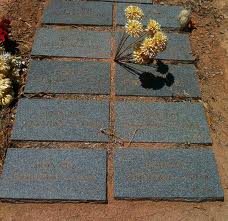
The flowers came with the plot.

There was a death in the family yesterday. No condolences, however, will be accepted.

Here lies comfortable, ease-loving John. He was a small man, full of fear, who only stepped out when it was safe.

He was a small man and shrinking. His favorite way to deal with anything uncomfortable was to defer. Defer it to someone else or some other time. In fact, they say the cause of death was avoidance. He avoided so much that it finally fell over on top of him and killed him.

He never did anything he didn’t want to do. For that reason he will not be missed.

He was buried in a plot next to his father who spent the last few years of his controlled, ordered life in a wheelchair, staring. John was starting to stare, too, until he found there was nothing there to look at. His surviving relatives are ambivalent.

There will be no services because no one but his former self is sad to see him go, and no one will mourn his passing. No one cares, because he didn’t care. He was a small man with small expectations and limited decisions.

He is survived by his born again self who is a little sad to see him go, but, at the same time, anticipating being alive again, though understandably apprehensive even in light of resurrection power. It will be hard it first because it is all new.

It is said, however, that his wife is dancing on his grave.

Posted in Uncategorized | 14 Comments

Getting it

In today’s continuation of Marti’s thoughts on cleanliness she is referring to a story in Acts 10 where Peter, a Jew and leader of the early church of believer’s in Christ, is lead by the Lord to the house of a Roman soldier named Cornelius who was “devout and God-fearing… gave generously to those in need and prayed to God regularly.” Gathered in his home is a small crowd of non-Jews who have come to hear Peter, who has had his own “aha” moment prior to this. “You are well aware that it is against our law for a Jew to associate with a Gentile or visit him,” he starts out. “But God has shown me that I should not call any man impure or unclean.” For the whole story, read the tenth chapter of Acts.

In Acts 10:34-35 Peter says, “I get it” or in his words, “I most certainly understand now that God is not one to show partiality, but in every nation the man who fears Him and does what is right, is welcome to Him.”

I am getting it too. Maybe my problem is a bit bigger than something that might be solved with a bottle of bleach. Clorox is still good for removing the disgusting, smelly stains from baby clothes and the bacteria breeding genes of boys. Yet cleanliness has nothing to do with what we can do for each other or ourselves.  That is because we are equally sinful, and worthy of God’s wrath. We are equally lost. We are equally undeserving. The gospel is the good news that cleansing has come, through the Jewish Messiah, Jesus, to all who personally believe in His death, burial, and resurrection. And when we trust in Him, whether Jew or Gentile, we are equal for the cleansing with our worth based upon the work of Christ, not on our own good seal of housekeeping. When one’s righteousness is based upon God’s work, through Christ, there is no basis for self-righteousness, and thus no basis for superiority or pride.

Peter now claims to “get it,” this essential equality, which prohibits him from falsely judging and practicing separation by the avoidance of certain “unclean” things and by withholding the gospel from those Gentiles who would hear it and receive it.

Peter struggled through his cultural practice of holiness and separation and we are guilty of the same kind of legalism and externalism today.  Peter did not change overnight nor will our entrenched ideas and beliefs. Nevertheless, one thing is certain, God never meant for anyone to judge another. Therefore, by the power of the Holy Spirit, let’s stop the proliferation of our spoken and unspoken judgment.

Here are some concluding thoughts:
Let’s each step into the shoes of those we deem unclean and see what they see when looking at us.

This new insight will cause our knees to buckle toward the floor and our heads to bow in supplication.

Receive the cleansing power of Jesus Christ.

Let your heart rest.

Place one foot in front of the other and

Walk with liberty and authority of the Spirit,

Delivering the gospel of welcome – a promise of deliverance that will bring testimony to the Lord’s glory, causing those that have no hope to hear and run towards Him instead of away from Him and into the world unarmed.

This kind of cleanliness is indeed next to godliness because it is God working through us doing what we could never do for ourselves.

Posted in Uncategorized | 1 Comment

Cleanliness is next to…

[My Clorox story woke up the pen of Marti…]

If I had my way, each member of my family including my new daughter-in-love would carry a bottle of bleach as a hip bucket, stringing the handle through their belt buckles. While not biblical (and probably one of the greatest barriers to the expansion of the gospel of welcome), cleanliness is next to… Marti’s happiness.

And my happiness is supported by science.  People are unconsciously fairer and more generous when they are in clean-smelling environments, according to a recently published study in Psychological Science entitled “The Smell of Virtue.”

Therefore when breaking out the bleach to sanitize things and stop the spread of disease and the children that create it, know that you are encouraging charitable giving and other acts of kindness with just a few spritzes of citrus-scented Windex or Clorox.

Now what wrong with that? Just about everything.

Like the Jewish leaders of Jesus’ day, I can measure my holiness with the distance I keep from my family’s nasty, dirty hands that simply must smudge their grime into my freshly whitewashed walls. Like the scribes and Pharisees, I am looking for a Messiah who will bless me and overthrow those I deem contaminated.

You can probably imagine the impact to us well-washed when discovering that Jesus sometimes blesses the despicable instead of properly scrubbed me, causing me – an enthusiastic and supportive follower – to become hostile by serving just a couple tablespoons of bleach to create excruciating pain to whom it was foretold (Luke 4:16-30).

And if that wasn’t insulting enough, Jesus, far from keeping His distance from “those transgressors” actually seeks them out and fellowships with them, addressing the Law to the heart of things. This infuriates us sterilized scribes for taking time from our outward ritual and ceremony, and making us concentrate on our jealous reactions of interrogation (Luke 5:29-39).

After all, we have the corner on Christianity.  Salvation was not just “of the clean,” brought to pass by God according to His promises to the clean, and through the only clean one—the Lord Jesus,  but that salvation was primarily “for the clean.” If there are those among the great unwashed who wish to cash in on the benefits of salvation, they can become clean like us.

Yet, defilement, I am beginning to understand and as Jesus taught, is not a ceremonial thing, but a matter of the heart. Sin does not penetrate man from without. (There is no need to be Hazmat certified.) It begins in the heart and works outward.

Why do I feel like I am on a sinking boat with an empty bottle of bleach and a pair of scissors, cutting diagonally across the bottom for a handy tool to scoop out the water? I can’t bail fast enough. That’s because, during His last meal with the disciples, the Lord indicated to them, and to us today, what true cleanness is and how it is to be accomplished only by Him:

Jesus knew that the Father had put all things under his power, and that he had come from God and was returning to God; so he got up from the meal, took off his outer clothing, and wrapped a towel around his waist. After that, he poured water into a basin and began to wash his disciples’ feet, drying them with the towel that was wrapped around him.
 
He came to Simon Peter, who said to him, “Lord, are you going to wash my feet?”
 
Jesus replied, “You do not realize now what I am doing, but later you will understand.”
 
“No,” said Peter, “you shall never wash my feet.”
 
Jesus answered, “Unless I wash you, you have no part with me.”
 
“Then, Lord,” Simon Peter replied, “not just my feet but my hands and my head as well!”
 
Jesus answered, “A person who has had a bath needs only to wash his feet. And you are clean….”

(…to be continued.)

Posted in Uncategorized | 5 Comments

Too much of a good thing

My wife loves to clean with bleach. She uses a bleach-based cleaner on the kitchen tiles and likes to put bleach in the laundry. The problem is, she likes it so much that somehow (we’re not sure how) it manages to get on things that are not white, and that means they get badly stained and permanently damaged. Everybody in the family has a treasured colored T-shirt or pants that have been spotted with bleach. As a result, we all try to keep her away from the laundry if at all possible. If I catch her any where near the washing machine with a Clorox bottle it’s a simple “Alright, Marti, put the bottle down, put your hands up and step away from the machine!”

Actually, it may be a conspiracy. It may be more of a coincidence that anything that gets bleach stains on it seems to end up in Marti’s pajama drawer. She likes to sleep in my formerly favorite T-shirts.

I might be stretching here, but there seems to be a spiritual component to this somewhere. Jesus called the Pharisees whitewashed tombs. “Woe to you, teachers of the law and Pharisees, you hypocrites! You are like whitewashed tombs, which look beautiful on the outside but on the inside are full of the bones of the dead and everything unclean” (Matthew 23:27). Their idea of righteousness was to bleach everything, which ends up working only on the surface of things.

I think that’s what legalism does. It tends to take all the color out of life. No wonder Christians have a reputation of being so boring. When our spirituality is legalistic, we lose all color. Legalism (which is up to us) tends to whitewash our humanity where true righteousness (which is up to Christ) is a mixture Christ and who we really are. Which doesn’t mean there is anything wrong with the law, it’s just that what’s good for getting things clean can also take the color out of something that was meant to be colorful.

Being righteous doesn’t mean being something other than human. In fact, if our righteousness is nothing of our own making (which it is not) it should be beautifully colored with our humanity.

In Paul’s description of the new covenant, the whole point is the contrast that Christ’s life creates in us between His power and our humanity. The “treasure in earthen vessels” that His life creates in us is precisely so that there will be no doubt that the power comes from God and not ourselves (2 Corinthians 4:7).  And he restates it in a different way a few verses later: “For we who are alive are always being given over to death for Jesus’ sake, so that His life may also be revealed in our mortal body” (2 Corinthians 4:11), the emphasis, for our current discussion, being on our mortality.

So use bleach in your household, if you want to, but don’t try being something that you are not. That takes the color out of life and hides the impact of Christ in you.

Posted in Uncategorized | 5 Comments

Three pictures

While looking through my library of the pictures I have used for Catches, I couldn’t help but spot three titles that stood out in the list.  They were:

empty cross
empty sandbox
empty tomb

in that order. Being a person who is always looking for the deeper significance of things, I wondered if there was something in this. Not that there is something mystical or inspired about this, but in seeking to place significance in something, it becomes a means of discovering some new insight – some new way of seeing things previously undiscovered. It is the way I think, write and create. I find significance in the insignificant. And the more I thought about this, the more I knew I would come up with something. So here goes…

The empty cross signifies the end of our condemnation and punishment. In the words of an old hymn: “Jesus Paid It All.” That means He paid it all not just for a select few, but for everyone.

The empty sandbox is the world waiting for you and me. Who are we going to put there, just our friends? Just those who believe as we do? Just people who are safe? Just a select few, or everyone?

I love what Cheryl sent me yesterday after Friday’s Catch about children playing in the sandbox: “We love this experience in our small town that is 85% Mexican, and many of us do not speak each other’s language. It is great fun to talk and connect with strangers and feel that connection – together in the human race – together with God, our King! We end up holding hands with ex-cons, sober addicts, illegal aliens, homeless, dirt poor, the walking and wounded… but it is often a bit of heaven.

Yes it is, Cheryl. And Christ dying on the cross for everybody kind of puts us all in the same sandbox doesn’t it?

But of course none of this would mean anything without the empty tomb. The empty tomb authenticates everything about Christ. He is who He said He is. He vacated both the cross and the tomb and now He sits at the right hand of God making intercession for us. The empty tomb has put an end to our despair, sealed our forgiveness and crystallized our hope.

Three pictures; three insights; three very big conclusions.

Posted in Uncategorized | 3 Comments