Coming out from behind the invisible lectern
Okay, time for some truth-telling. Marti and I haven’t exactly been on the same page with this 3-part series on Abraham and Sarah.  That’s why it has been delayed and why we are starting from the beginning again.
We can blame all of these delays on Marti. Starting to fråeak out about losing her home, she is seeking the accountability of three trusted brothers through correspondence, always copying me in on her writing and their responses. (Any similarities between these guys and Abraham’s three visitors is unintentional.) To be perfectly honest, she has thrown herself at their feet, and they, in turn, are directing her through ‘clues’ she is to put together.
Marti’s home means everything to her for many reasons that you can all identify with, whether your family is at risk or not. It is home base for a family that surrounds Chandler with access to his brother and sister. Having finally identified the nature of Chandler’s disabilities, our community is exclusively offering, and paying for, a very special school for Chandler. The tuition alone would pay a year’s rent for most people. Our home is also a refuge for our daughter while in residency, and for our firstborn son and his new wife. Marti sees our cottage as part of a compound where they can easily get to, should they choose. In addition, Marti’s policy is to give back what you take out, and thus has thrown her gifts of leadership into her community and its affairs.
But more than just a home, this home contains a promise I made… roots. I promised her I would never cause her to uproot as I have many times during our life together. She has placed her faith on my promise, as she should. I simply have not delivered on the promise. (And no, this is not one of those Christian stories where the Lord is asking me to lead my family into the wilderness. Rather, He is asking me to lead them out of the wilderness into a settled place, though I have been reluctant to do so.)
One of the last clues given by the three who challenged her was to find peace in Him and Him alone. Starting from the beginning, which is the book of Genesis, she came upon a story of nomads – a story of believing and not believing and why. And where she rested – at least with regard to this part of her search – is with Genesis 18:14, “Is there anything too hard for the Lord?”
So we are going to rewind this tape back to Friday and begin again with Marti providing the study while I invite you to step into my shoes and see the story through my eyes. To help you identify the voices: scripture is in brown, Marti’s writing is in blue, mine is in black.
We are publishing all three parts together for three days and suggest you do as you choose: save a part for each day, or take them all at once, more than once. They will take you deeper upon multiple readings.
And one more thing… this was to have been a major fundraising drive to save our home, and it still is, but only inasmuch as we ask you to consider, as we are, “Is anything too hard for the Lord?”
Part 1: Grace and Groceries
 The Lord appeared to Abraham near the great trees of Mamre while he was sitting at the entrance to his tent in the heat of the day. Abraham looked up and saw three men standing nearby. When he saw them, he hurried from the entrance of his tent to meet them and bowed low to the ground. He said, “If I have found favor in your eyes, my lord, do not pass your servant by. Let a little water be brought, and then you may all wash your feet and rest under this tree. Let me get you something to eat, so you can be refreshed and then go on your way — now that you have come to your servant.”
“Very well,” they answered, “do as you say.” (Genesis 18:1-5)
“Marti,” I whine. “Chandler and his nasty neighborhood friends are here… again… and this time he invited kids he doesn’t even know by name! And of course they are crawling all over the table like ants ready to carry off what ever looks editable. Hungry little buggers. Don’t they have homes of their own that come with plumbing and parents?”
I’m no Abraham, but there is no way 12-year-old boys can be angels, either. No little wings sprouting anywhere. Their goal is not to prophesy, but to eat us out of house and home. This is the last time I let Marti do the shopping. One week of groceries can be gone in a second. From now on I am maintaining control of the refrigerator and the pantry, making sure there is never an abundance of anything available – just enough for the next meal.
Hardly the generous spirit manifested by the patriarch, it is in keeping with my general paranoia over never having enough – enough food – enough money. It’s my excuse for everything. It is as if I consider it godly to be lacking in money. But if I am to be honest, and I am trying not to hide behind this invisible lectern, it excuses me from having to be gracious or responsible. However, by being this way, it doesn’t exactly make me keen to God’s favor. To be sure, the grace is right in front of me, and given to me freely. I just let it go on by without receiving; and if I’m not receiving, then I’m cutting myself out of giving too. But my, if I don’t look godly to myself by never having enough!
“Very well,” [the three strangers] answered, “do as you say.”
 “First time visitors!” Abraham must have shouted as he ran to tell Sarah to start baking, while he brought out the good china and quickly polished the silver from Sarah’s grandmother. There was no need to wait for the meat from the freezer to thaw. Abraham had in mind a couple of high quality and all-natural filets that he gave to the captain of the grill to cook to perfection.
Many dinner parties took place at the old “tent-stead” in Canon, about 19 miles southwest of Jerusalem, and while this dinner was very special, it was no more so then when other poverty-stricken, penniless nomads of the desert arrive. Though Abraham knows it is unlikely he will never see them again, all of Abraham’s guests are treated as Kings come to visit and tonight was no different. With oven still-warm bread running over with melted country butter and homemade preserves, just a little pepper on the medium-to-rare filets, cottage cheese salad with figs, and a tall glass of cool milk. With the only exception being that no one hooked up the iPod to dance, dinner was served with gracious hospitality. This spontaneous response is evidence of a heart filled with grace and love – our hearts responding immediately to human need, no longer invisible but known, and embraced – all strangers treated as royally as though they were the kings of kings.
Part 2: When God Comes to Dinner
 When the three mysterious strangers asked where Sarah his wife was, Abraham recognized the identity of one of his guests. This is because only the Lord knew of her recent name change but mostly because one of the strangers repeated the Lord’s promise to Abraham of a son.
Then the Lord said, “I will surely return to you about this time next year, and Sarah your wife will have a son.” (Genesis 18:10)
From behind the dividing flap, Sarah heard everything. She heard the question and the promise, and she too realized it was God who was repeating His promise that she would have a son. She looked in the mirror and saw a 90-year-old woman with fading large blue eyes staring back at her, stooped over with a head of white hair and deep ridges in her face. So when she heard this, her response was to laugh cynically and silently to herself. But the Lord read her heart and heard its skeptical laugh.
Then the Lord said to Abraham, “Why did Sarah laugh and say, ‘Will I really have a child, now that I am old?’ Is anything too hard for the Lord? I will return to you at the appointed time next year, and Sarah will have a son. Sarah was afraid, so she lied and said, “I did not laugh.” But he said, “Yes, you did laugh.” (Genesis 18:13-15)
Remarkably enough, the account ends right here. Suddenly the subject is dropped. We are left to wonder what this means. Back in Chapter 17, when God announced to Abraham for perhaps the fifth time that he was to have a son, Abraham laughed with faithful delight in what God would do in spite of the ravages of time and sin in his body and that of his wife.
In contrast, Sarah’s laughter is pessimistic, unbelieving. If this were the entire story, we would think her an ill-mannered, cantankerous old woman. But thanks be to the Lord who always leads us in His triumph, we see Sarah’s name listed in the hall of fame of the heroes:
And by faith even Sarah, who was past childbearing age, was enabled to bear children because she considered him faithful who had made the promise. (Hebrews 11:11 NIV)
Now we begin to see what must have happened.
After the guests left and as Sarah cleared the table she continued to think about what she had heard, and the words of the Lord came home to her heart — especially the question God had asked, “Is there anything too hard for the Lord?” As Sarah thought about it, she had to face that question. Is there? Is anything too hard for the Lord? Is there anything too hard for the Creator, the one who called out of nothing the vast world in which we live and beyond that the worlds which circle us in the limitless reaches of space, the one who sustains from day to day all the mighty, complex forces of earth, brings the sun up on time, guides the planets in their whirling courses, predicts human events, and centuries later brings them to pass exactly as he promised. Even the demons obey His word and tremble when they hear it.
“Is anything too hard for the Lord?”
Even with the contradictory facts of her own life and beyond the clashing feelings of her own heart, nothing is too hard for the Lord. If He has promised, then it will be done.
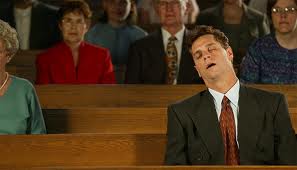
But… (John adds) We evangelicals have learned ways around miracles like this. We love the Bible stories and we sing “Standing on the Promises,” but we don’t really expect anything to happen when 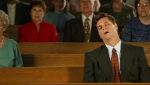 we do. We are conditioned by year after year of hearing sermons and doing nothing about them to let this pass. Even the preachers have adjusted their preaching so that, God forbid, nothing will conflict with the football game after church. We will move the people, but not so that anything is really required of them except to hold to the right beliefs and doctrines.
So in this kind of environment, no one is eager to stretch faith into anything that would actually take an act of God to happen. No, our faith produces low-level results – modest expectations – certainly nothing that would rock the boat. Attainable levels of change.
Heck with anything being too hard for the Lord; is it anything that’s too hard for me? If it’s too hard for me, I don’t want to have anything to do with it. Post menopausal women getting pregnant is fine for the Old Testament, but try that at the First Christian Community Church and you will definitely freak people out. They will quietly shoo you away to that “signs and wonders” church across town.
Have you noticed how old Christians think new Christians are “cute” the way they actually believe God will do things in their lives and low and behold, He does? That’s just because God is encouraging their new faith. He buttresses new Christians this way, but once you become “mature” you don’t need this kind of tangible intervention by God. Mature Christians are satisfied with lesser things.
Doesn’t the Bible say we walk by faith and not by sight, so faith is something you can’t see anyway? It’s not going to make any lasting effect in the real world here and now. It just gets us all ready for heaven.
We’re talking about a kind of miracle-free Christianity.
Well here’s something that’s hitting me as I’m going over this: I’m done with the evangelical safety net; I NEED A MIRACLE! I need God to change me because I’m not doing a very good job trying to change myself. I am tired of small changes that I can explain. I need the unexplainable. Get me this kind of faith. Show me the promises that will really change me. I want to laugh with Abraham, not the  cynical laugh of Sarah. I need a miracle. Come on now, everybody: be honest. DON’T YOU?
Part 3: Faith cannot stand alone
Faith does not stand alone – ever. Faith must have a promise to stand on. When God has given His word – his promise – faith can always look beyond all the conflicting circumstances. “Is anything too hard for the Lord?”
Sarah rested upon the Lord’s promise and, in spite of the circumstances, believed God.
Our faith, you see, looks beyond all the opposing circumstances to the one who promised. Ray Stedman, one of the twentieth century’s foremost pastors and biblical expositors, said it best during one of his Sunday messages:
Do not be misled by the popular delusion that faith stands by itself, that it is simply believing — anything! Faith must have a promise to rest upon. Anything else is presumption, gullibility, folly. But when God has given a word, it is the Word of God, and it can be trusted despite circumstance, feelings, or anything else. For is anything too hard for the Lord?
Through faith Sarah received power to conceive when she was past age because she counted him faithful who had promised.
 Oh how easy it is for me to leave Sarah with the dishes, judging her for a pessimistic heart while self-righteously thinking I was entitled to join God and Abraham for a cup of coffee out on the patio as they discussed how best to accomplish the destruction of Sodom and Gomorrah.
Perhaps it was guilt or God calling me back into kitchen, but I went in and turned on some upbeat music as Sarah and I raced to see who could clean the dishes the fastest. I won. As she put away the last piece of silver, Sarah told me about how she faced into God’s question, “Is there anything too hard for the Lord?” and how she confessed her disbelief and placed her faith on the Lord’s promise, as impossible as it once appeared, and by faith counted it real.
As we sat down to the last of the wine, she asked me what was I having a hard time doing. I told her how hard it is for me to be what God wants me to be: gracious and hospitable when I know I am not – to love and forgive when I don’t and how especially hard it is for me to conquer my timidity to become a man of boldness and courage that has no limits. I told her about my wife and how hard it is to live with a woman who stays instead of goes, trusts when I am unfaithful; believes in me when I don’t; and puts faith in a promise that I have never even tried to fulfill.
As she raised her glass her eyes met mine and she said, “Yes it is very hard for you, I know. And while God never promises days without pain, laughter without sorrow, sun without rain; when our faith learns to rest not on its own resources that are never adequate, but upon the unfailing resources of God in response to a definite promise he gives, “Is anything too hard for the Lord?”
If even a corner from one of the 3 parts of these messages touches your heart, respond by placing your faith in complete assurance that our Lord does not lie. Accept a promise of God as a fact as solid as a mountain and vastly more enduring. Our faith changes nothing except our own personal relation to the word of His promise.
This is what our Lord is offering to be and do in us, and through us, in our lives today. God responds in the same way to us as he did to Abraham, so when we are oppressed and confronted with circumstances beyond our handling, we find the promise of God that covers the situation. In prayer we can sense some prompting of the Spirit that gives us a word of faith to rest upon. Then, like Sarah, we may ask ourselves this question: “Is anything too hard for the Lord?”
The Lord is making the impossible real every day.

 Faithfulness is the one ongoing quality God asks of us. He is willing to justify us; he is willing to grant us mercy instead of the condemnation we deserve, but he does ask for a life of faithfulness.













 John Fischer The Catch