
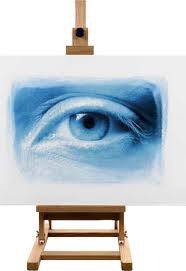
 From last Friday’s Catch about a psychologist painting the homeless, our friend, Carole has brought us some additional insight.
She writes: “Funny how each of us sees something different in folks we meet. A friend of mine and I used to take our sketch books to the local Waffle House late at night and ask the folks we met if we could sketch them. They always readily agreed! Sometimes we would sketch the same person, and often the person would ask if they could have my sketch. I always complied. One night, my friend commented to me that people wanted my sketches because they weren’t true to life. (I tended to leave off a wrinkle here or there, or in some other way soften what I saw; she, on the other hand, drew what was there, warts and all, and felt her pictures told a truer story.) She was right. The fact that folks preferred my drawings only proves that we really don’t want to see all the truth about ourselves (either physically or in our character). On the other hand, do we really need to point out every little flaw we see in someone else? I like to think that those folks left feeling uplifted a little by the attention (and in many cases the coffee or meal we provided), and with a picture of the person they could be. So maybe the lesson here is see ourselves as we are, and see others with gentler eyes.”
I think her last point is the most important: be truthful with ourselves, but “see others with gentler eyes.” Paul puts it another way in Philippians 2:3, “Do nothing from selfishness or empty conceit, but with humility of mind regard one another as more important than yourselves.”
It’s the overall rule of thumb to be harsh on ourselves and easy on others, for the simple reason that we know ourselves so much better than we know anyone else. This is why the log is always in my eye – the speck in someone else’s. Not that mine is so much worse; it’s that mine is mine. I’m an expert on myself, not on anyone else.






 John Fischer The Catch
Carole – “see other with gentlers eyes”. That is just wonderful, and I agree – though we may see the hard lines, isn’t it more wonderful to see the softer ones? Terrific Catch today. I am going to try to adopt the line – see others with gentler eyes.. Thanks for your incite.
It is so much more fun!!
leave it to my kind, wounderful and fun loving other Catch friend Carole to come up w/ this sooo very good saying: ““see other with gentlers eyes” Amen! 🙂
Your last paragraph surprised me, because your interpretation of Matthew 7:1-5 is unusual. I’ve been reading & writing reflective blogs (for a friend’s blog) on moral psychologist, Jonathan Haidt’s book, The Righteous Mind: Why Good People are Divided by Politics and Religion. Psych studies would confirm the usual interpretation – that we’re very good at seeing and criticizing others’ flaws and very adept at covering up our own, to “think of ourselves more highly than we ought”. The speck “over there” is actually easier for us to see than the “log” is here.
There’s an article in The New Yorker magazine that summarized this “bias blind spot”: “One provocative hypothesis is that the bias blind spot arises because of a mismatch between how we evaluate others and how we evaluate ourselves. When considering the irrational choices of a stranger, for instance, we are forced to rely on behavioral information; we see their biases from the outside, which allows us to glimpse their systematic thinking errors. However, when assessing our own bad choices, we tend to engage in elaborate introspection. We scrutinize our motivations and search for relevant reasons; we lament our mistakes to therapists and ruminate on the beliefs that led us astray.
“The problem with this introspective approach is that the driving forces behind biases—the root causes of our irrationality—are largely unconscious, which means they remain invisible to self-analysis and impermeable to intelligence. In fact, introspection can actually compound the error, blinding us to those primal processes responsible for many of our everyday failings. We spin eloquent stories, but these stories miss the point. The more we attempt to know ourselves, the less we actually understand.”
http://www.newyorker.com/online/blogs/frontal-cortex/2012/06/daniel-kahneman-bias-studies.html
I read the scripture, then see in the studies lots for solid reasons for needing others in healthy community calling one another to follow Christ – we need people who see us with gentler eyes, and who help us not gloss over our brokenness and warts, keeping us from imagining ourselves to be better than we really are. We all need Jesus, all the time!
This is excellent. Thanks for sharing it with us. Are we saying that you can help me with my log, because to you it’s just a speck? That’s a possible twist.