 There is a place where the power of God works most effectively in our lives, and it’s not in the report. It’s not in the story with a happy ending. It’s in the story with no ending at all because it isn’t over yet.
We’re all used to hearing the testimony with the victory at the end. That’s an easy story to tell because it reflects well on us. If there was a mistake or a failure or a personal struggle involved, it is in the past. We learned from it and moved on, and now we’re the better for it. What if there is no victory yet, but we still have to keep on living? Can you tell that story too? I believe we must, or we give no opportunity for the power of God to show up in our lives.
God’s power requires us to be human. It’s the earthen vessel with the treasure inside (2 Corinthians 4:7). It’s the light inside the cracked pot. It’s the life of Christ revealed in our mortal bodies (2 Corinthians 4:11) It’s God’s power made perfect in our weakness (2 Corinthians 12:9). Admittedly that’s a harder story to tell because it requires our vulnerability.
As a speaker, I usually tell stories on myself that have endings. This is necessary because the ending is usually the point I am trying to make. But as a friend, a mentor, or one who comes alongside, I need to tell stories without endings — the things happening right now that I have no control over. It’s only then that the real power of God can show up in my life. I’m not in charge of that; He is. We can write (or rewrite) the stories that have endings. We can tell them any way we want to (and usually they get better with the telling). But the stories we are currently living leave us stranded in the middle and it’s from that place that real faith and trust become tangible.
It’s Moses standing before the people he was leading without a glowing face from being with God or a veil to hide the fact that the glow was fading (2 Corinthians 2:12-13). (Something he never did.) It’s just plain no-glow Moses waiting for the next thing God is going to do. The power of God requires this from us — this kind of vulnerability and this kind of trust.
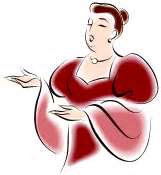
It’s the lesson before it’s learned, the question before it’s answered, the problem before it’s solved, the ordeal before it’s over. It’s everything that happens in our lives before the fat lady sings.
The story has to be live.
Who is willing to live like this? Who is willing to sign up for this kind of discipleship? Who wants to lead this way (and follow)? I don’t think any of us really do, but that doesn’t matter. God wants to show Himself in our lives, but He can’t when we’re in control of everything.


John,
Excellent as always–but what does 2 Corinthians 2:12-13 have to do with Moses or the veil?
Thanks.
Hi..I checked and that should be 2 Cor. 3:12,13 actually read to the end verse 18 for the good news. And note that in the middle of the story.look for the little words “But God”. That makes all the difference
2Cor.3:13…
Should have been 3:12-13. Sorry.
Got it–thanks!
So so so true. Needed to hear that today.
Good point!!
I am very displeased with the title of the post. I know it is an old saying, but I think that “fat lady” is one of those sayings that is hurtful and should not be perpetuated.
It comes from a particular opera I believe that calls for this kind of part.
Thanks…I am scheduled to speak on a topic related to “Bottoms in Recovery”…thank you for reminding me of the fact that I don’t need to “glow”…or demonstrate…it’s all about what God has done or is doing…recovery is an ongoing process and God is the Controller. : )
control is illusion…God is real.
In honor of the Rubenesque Lady not having sung yet let me say, BRAVO! and ENCORE!
Pingback: Verse of the Day 4-27-13 2 Corinthians 11:1-3 | ricklee's poetry plus