
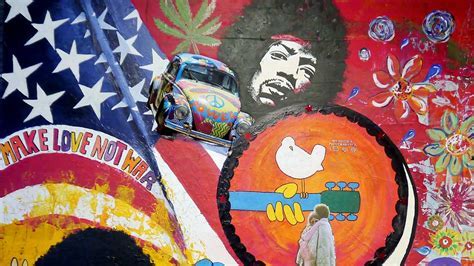
The Jesus Movement was born out of a youthful countercultural movement that was against the Vietnam War, for civil rights, championed sex, drugs and rock ’n’ roll, and was not very kind to the older generation. So the Jesus Movement carried over some of that same spirit of rebellion while seeking a higher, deeper spirituality through Jesus that few were experiencing at that time. Much of the success of the Jesus Movement among those who were not Christians was due to the fact that Jesus Christ Himself in history was a countercultural figure. Hippies and druggies gravitated to Jesus because they had never seen Him in this light before. The biblical Jesus already stood for many of the values the counterculture had embraced.
There was no need to make Jesus countercultural. He already was. Jesus was against the religious leaders of His day, in fact, they were the ones who killed Him. Everything He said and did flew in the face of traditional religion. He kicked the money changers out of the temple, He reinterpreted the law of Moses, He humiliated the religious leaders in front of the people, He gave no regard to social status, He chose to identify with poverty not wealth or power (born in a stable before shepherds and farm animals, rode in on a donkey’s colt for His triumphal entry into Jerusalem, His followers were mostly the poor and the diseased), and His crowning achievement was to be flogged by the Roman soldiers, mocked with a crown of thorns on His head, and die a criminal’s death on a cross. He did not fit into anyone’s expectation of the coming Messiah, and yet He was the savior of the world.
Counterculture by definition is, “A way of life and set of attitudes opposed to or at variance with the prevailing social norm.” At it’s outset, the Jesus Movement was all of this. Hippies invaded churches with long hair and jeans and some were thrown out because they did not fit the social norm for a house of worship. Baptisms were held outside in public places. Music was rock ’n’ roll featuring guitars and drums, instruments that were formerly an anathema to older Christians.
But something happened to change all this. It was gradual, but slowly, the church started to change. It was impossible to hold back the prevailing cultural winds. As more and more young people came to Christ, they ended up in churches that had to adjust to accept them or stay with the traditional and die. Soon music in church was contemporary, dress was come-as-you-are, choirs gave way to worship bands and preachers came out from behind pulpits. Christian music, now mostly consisting of worship music developed its own genre. Christians began having a wider influence, its culture spilling over into politics. Soon Christians became one of the most powerful voting blocs in the country.
Now Christian worship music plays 24/7 on popular radio stations, Hollywood is investing in faith-based movies, politicians court Christians and Christian leaders in other words … Christian culture has gone mainstream.
What began as a counterculture turned into a subculture. But there is a problem here, because these two perspectives are radically opposed. A counterculture is trying to change the prevailing social norms. A subculture is trying to fit in.
Why is this important? Because if Jesus was countercultural He will always be countercultural. If Christianity is being widely accepted in a culture, one must at least ask what is it that is being accepted. Why is there no conflict between Christ and culture?
A Christianity that is no longer countercultural has lost its prophetic voice. It is speaking for the culture rather than speaking into the culture.
Write me and tell me some of the things that are countercultural about your faith. You can reach me by simply replying to this email.







 John Fischer The Catch
John,
How about this? I have a pervasive, sinking, sick feeling every time I think about Washington D C and the leadership of this nation. American churches seem to think that might and power are the tickets to a better future rather than dependence on the Spirit. We’ve forgotten or conveniently ignored the tired, the poor, the huddled masses yearning to be free. And we want to keep them out because they pose a threat to our white privilege. And we still hold to the fairy tale that all our problems cans be solved through political means. It’s a gut feeling but I tend to trust my gut rather than any news network.
J.D.
Sounds pretty close to the truth to me.